Indonesia’s Economic Resilience Under Scrutiny Amid Global Challenges
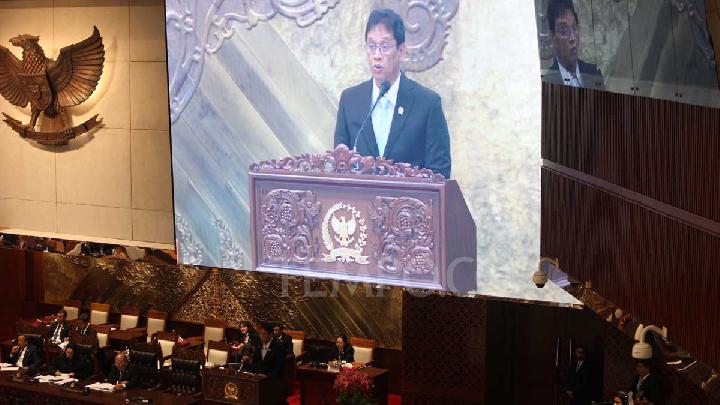
Indonesia s Purbaya Lauds Economic Resilience – On June 10, 2026, Finance Minister Purbaya Yudhi Sadewa emphasized Indonesia’s ability to maintain economic stability despite mounting global uncertainties. During a session with the House of Representatives’ Commission XI, the minister underscored the nation’s continued performance in key economic indicators, including robust growth and controlled inflation rates.
Strong Growth and Controlled Inflation
Purbaya pointed out that Indonesia’s economy demonstrated resilience during the first quarter of 2026, achieving a growth rate of 5.61 percent. This figure, he noted, reflects the nation’s capacity to navigate external challenges while maintaining internal momentum. Inflation, meanwhile, remained within manageable limits, hovering at 3.08 percent year-on-year (y-o-y) in the previous month, indicating effective macroeconomic management.
“We should be grateful that amidst the current global uncertainty, Indonesia’s economy continues to show resilience,” Purbaya stated during the meeting.
Trade Balance and Sectoral Recovery
The trade balance also recorded a surplus, a testament to the country’s export-driven strategies and efficient import management. This surplus, which has persisted for 72 consecutive months, underscores the resilience of Indonesia’s external economic dynamics. Purbaya further highlighted that imports remain dominated by productive commodities such as capital goods and raw materials, ensuring long-term economic sustainability.
Notably, the manufacturing sector exhibited signs of improvement in May 2026, with the sector’s performance index reaching 50.0. This marks stabilization after experiencing earlier pressures in April, signaling a potential rebound in industrial activity. The sector’s recovery is seen as a positive indicator for sustained economic growth, with increased production levels and a broader range of positive signals emerging.
Consumer Confidence and Domestic Demand
As the economy entered the second quarter of 2026, domestic economic dynamics showed encouraging trends. Consumers remained optimistic about spending, as reflected in the Money Spending Index and the Consumer Confidence Index published by Bank Indonesia. This optimism is attributed to stable income levels and confidence in the nation’s economic trajectory.
Positive economic activity was also evident in the increased sales of cars, motorcycles, electricity, and cement. These sectors have become crucial drivers of consumer demand, contributing to the overall economic health. Purbaya noted that the manufacturing sector’s expansion is particularly noteworthy, as it has rebounded from earlier setbacks and is now showing signs of renewed vigor.
Exchange Rate Volatility and Fundamentals
The rupiah’s exchange rate against the US dollar stood at Rp18,039 per dollar as of June 8, 2026. Despite this, Purbaya argued that the current depreciation is “overshot” and “undervalued,” emphasizing that domestic fundamentals remain strong. Key factors supporting this view include adequate foreign exchange reserves, a controlled current account deficit (CAD), and inflation rates within the target range.
“The rupiah’s depreciation until early June was mainly triggered by global sentiment and risk-off conditions in financial markets,” Purbaya explained.
Purbaya also highlighted the role of Bank Indonesia in maintaining stability through proactive monetary policies. The central bank’s adjustments to interest rates and liquidity management have been critical in cushioning the economy from external shocks. However, the minister acknowledged ongoing pressures from global market fluctuations and domestic financial transactions, which have influenced the currency’s performance.
Policy Synergy and Investor Confidence
The government remains optimistic about strengthening the domestic economy through enhanced coordination between fiscal, monetary, and financial sector policies. Purbaya suggested that improved management of export earnings, combined with efforts to deepen financial markets, could bolster foreign exchange supply and reinforce investor confidence. These measures aim to address vulnerabilities while capitalizing on growth opportunities.
Recent data revealed credit growth of 10.0 percent year-on-year (yoy) in April 2026, driven by a 19.5 percent yoy increase in investment credit. This growth reflects the government’s efforts to stimulate economic activity through targeted financial support. Meanwhile, foreign direct investment (FDI) in the first quarter of 2026 reached Rp250 trillion, a 8.5 percent yoy increase that highlights sustained foreign interest in Indonesia’s markets.
Capital Flows and Market Outlook
Foreign capital inflows recorded a net increase of Rp40.4 trillion by June 5, 2026, indicating a shift in investor sentiment. While the stock market still showed outflows, Purbaya noted that overall interest in domestic financial instruments, such as Government Bonds (SBN) and Bank Indonesian Rupiah Securities (SRBI), has remained steady. This suggests that investors are gradually recalibrating their portfolios to favor local assets.
Looking ahead, Purbaya expressed confidence that the rupiah would gradually strengthen during the second semester of 2026. The minister cited improved policy synergy and a more stable financial environment as key drivers of this expected recovery. Additionally, the government’s focus on deepening financial markets and optimizing export strategies is anticipated to enhance foreign exchange reserves and attract more capital inflows.
Indonesia’s foreign exchange reserves, which reached US$144.9 billion in May 2026, provide a buffer against external volatility. This level of reserves is equivalent to 5.6 months of import needs, offering a degree of security in times of uncertainty. The nation’s ability to maintain these reserves, alongside its controlled inflation and trade surplus, positions it as a resilient player in the global economic landscape.
As global uncertainties persist, Indonesia’s economic performance offers a beacon of stability. The government’s strategic interventions, coupled with the resilience of domestic sectors, are expected to sustain this momentum. Purbaya’s emphasis on policy coordination and market fundamentals underscores a proactive approach to navigating the complex economic environment. With continued vigilance and adaptive strategies, the nation is poised to maintain its growth trajectory and solidify its position as a reliable economic partner in the region.
Conclusion
Purbaya’s statements highlight a balanced perspective on Indonesia’s economic challenges and opportunities. While acknowledging the pressures faced by the rupiah and global market conditions, he remains confident in the country’s ability to adapt and thrive. The minister’s focus on domestic strength and policy synergy suggests a long-term vision for economic stability, even in the face of external uncertainties.