Italy to Cap Foreign Students, Ban Burqas and Niqabs in Schools
Italy’s government is preparing a new package of school policies that would place legal limits on the proportion of foreign students in individual classrooms
Italy Prepares School Rules on Foreign Enrollment and Face Coverings
Tempatdonasi.com – Italy’s government is preparing a new package of school policies that would place legal limits on the proportion of foreign students in individual classrooms and prohibit burqas and niqabs on school premises.
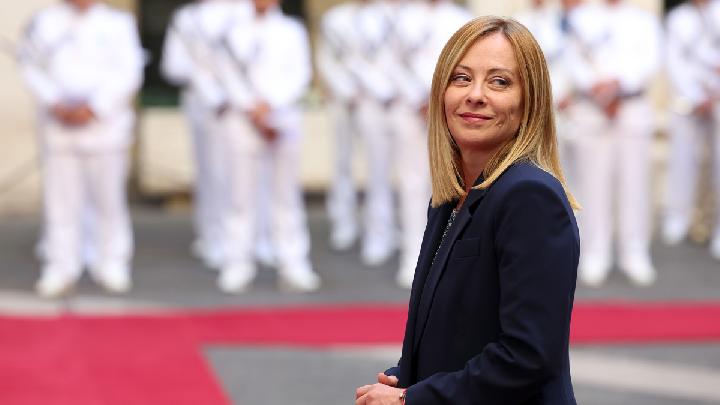
Prime Minister Giorgia Meloni outlined the plan on Sunday, September 20, 2026, during Fenix, the annual national youth festival organized by the youth wing of her Brothers of Italy party. The proposal is intended to address school integration and Italian-language learning, and is expected to be presented to the Council of Ministers for formal consideration in the coming weeks.
Classroom Quotas Still Undisclosed
A central element of the planned legislation is a maximum threshold for non-Italian students in each class. Meloni did not state what percentage the government intends to set, but argued that the number of students who do not speak Italian can directly affect a classroom’s ability to support language learning and social integration.
“A measure will soon be presented to a Cabinet meeting to legally establish a maximum number of foreign students per class. It also requires parents of foreign students facing serious difficulties integrating into the school system to learn Italian and bans burqas and niqabs in schools.”
The proposed rules would also require parents of foreign students who experience serious difficulties entering the school system to learn Italian. The measure links classroom composition with the language environment surrounding students, placing greater emphasis on the role families may play in helping children adapt to Italian schools.
Meloni said a child who does not understand Italian may be able to learn quickly when classmates and teachers can provide consistent support. She argued that the situation changes when many students in the same classroom lack Italian-language skills.
“If there is only one child in a class who doesn’t understand Italian, that child will likely be able to learn the language and integrate quickly with the help of classmates and teachers. However, if the number of children who don’t understand the language becomes large—or even the majority—that is no longer integration; it is neglect.”
The government has not yet detailed how schools would calculate the quota, whether exceptions would be available, or how the rule would apply in areas where immigrant communities make up a larger share of the local population. Those questions are likely to become significant as the bill moves through cabinet review and then parliamentary debate.
Focus on Italian Identity and Integration
During her speech, Meloni framed the proposal as part of a broader effort to protect integration in public education. She stressed that Italian students should not feel marginalized in their own classrooms.
“Italian children cannot feel like a minority in the classroom.”
The statement reflects an ongoing political debate in Italy over migration, national identity and the responsibilities of schools serving increasingly diverse communities. Italy’s location in the central Mediterranean has made it one of Europe’s principal arrival points for migrants crossing by sea, keeping immigration policy at the center of public and government discussions.
Schools are one of the places where the effects of migration become most visible. For new arrivals and children from non-Italian families, education can provide daily contact with the Italian language, local institutions and peers. At the same time, schools may need to support students who enter with different levels of language proficiency or interrupted educational backgrounds.
The government’s proposed cap appears designed to prevent a concentration of students who do not yet speak Italian in the same classroom. Supporters may view such a rule as a way to encourage language immersion, while critics may question how a fixed ceiling could be implemented fairly across different regions and communities. The eventual legislative text will be important in defining how the policy would work in practice.
Ban on Burqas and Niqabs in Schools
The draft package would also bar full-face religious coverings in educational institutions, with the burqa and niqab specifically named. Meloni presented the measure as a requirement that students attend school with their faces visible.
“You must go to school with your face uncovered, and in Italy no one, in the name of a real or supposed tradition, can decide that a young woman must hide herself.”
The proposed prohibition would form part of the same school-integration legislation rather than a separate immigration measure. Its focus on schools means the debate will likely involve questions about student rights, religious expression, educational access and the authority of public institutions to set rules for attendance.
Full-face coverings are distinct from other forms of religious dress, and the government’s announcement specifically refers to burqas and niqabs. Further details from the bill will be needed to clarify its scope, enforcement procedures and whether it applies solely during lessons or across all school settings.
Foreign Students in Italy’s Education System
Non-Italian citizens account for about 11.6 percent of students enrolled nationwide, or nearly 12 in every 100 pupils, according to figures from Fondazione ISMU, an Italian research foundation. That national figure does not necessarily reflect the makeup of every classroom, since enrollment patterns can differ substantially between towns, cities and regions.
The government has yet to disclose the exact cap it wants to impose, leaving one of the proposal’s most consequential details unresolved. A lower limit could require schools to distribute students across more classes or institutions, while a higher threshold could leave existing local arrangements largely unchanged. The bill may also need to address how transfers, new arrivals and limited classroom capacity would be handled.
For families, teachers and school administrators, the coming debate is likely to focus on the practical effects of the reforms as much as their political message. The proposed language requirements for parents, the classroom enrollment ceiling and the face-covering ban all connect the government’s approach to integration with the daily operation of Italy’s education system.
After cabinet deliberations, the legislation is expected to be sent to the Italian parliament, where lawmakers will determine whether the proposal becomes law and what final form its provisions take.
Related Reading
Frequently Asked Questions
What is Italy to Cap Foreign Students Ban Burqas?
Italy to Cap Foreign Students Ban Burqas is the main topic of this guide. The article explains the context, practical details, and next steps readers should understand.
Why does Italy to Cap Foreign Students Ban Burqas matter?
Italy to Cap Foreign Students Ban Burqas matters because readers are looking for a useful answer, not just a short summary. Good content should match search intent and help them decide what to do next.