Japan Revises Imperial Succession but Still Excludes Women
les While Maintaining Male-Only Line Japan Revises Imperial Succession but Still - Japanese lawmakers passed legislation on Friday that modifies how the
Japan Updates Imperial Succession Rules While Maintaining Male-Only Line
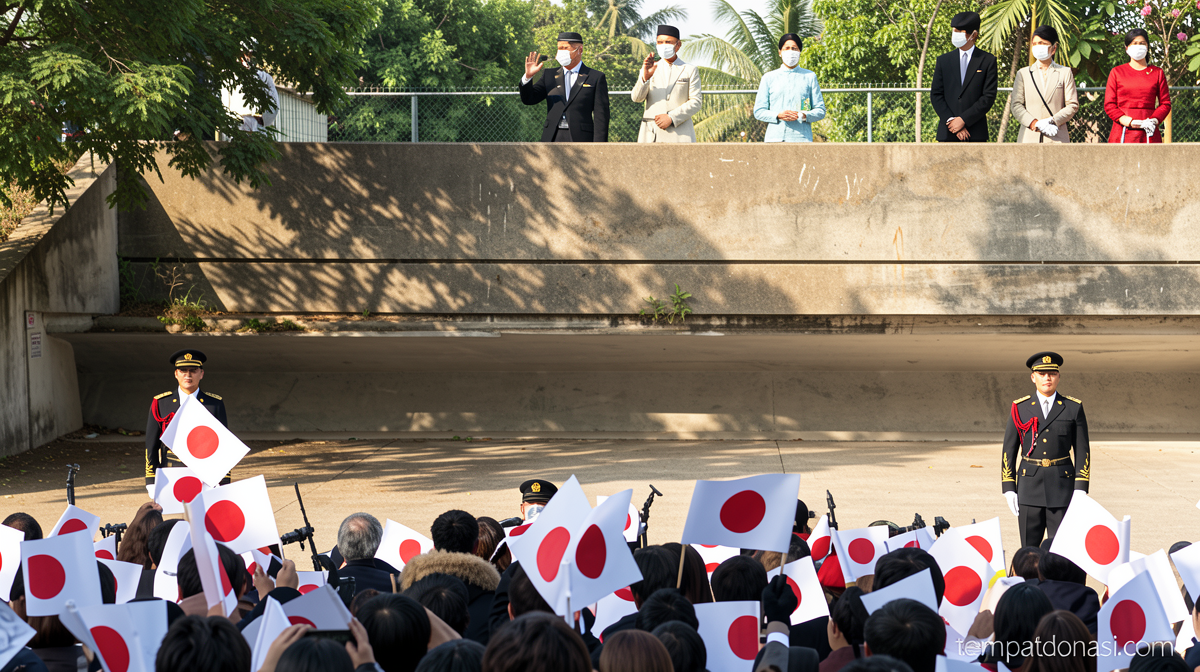
Tempatdonasi.com – Japanese lawmakers passed legislation on Friday that modifies how the imperial throne passes down through generations. The primary motivation behind this adjustment involves protecting against scenarios where Prince Hisahito, currently the sole young male descendant, might fail to produce a male heir of his own.
For many years, the imperial household has experienced declining membership. This trend stems largely from regulations that prevent female members and their offspring from participating in the strictly patrilineal succession process.
Understanding the Current Situation
Emperor Naruhito, who is sixty-six years of age and assumed the Chrysanthemum Throne in 2019, shares his life with Empress Masako. Together they have raised one daughter, Princess Aiko, who has now reached the age of twenty-four. Under existing regulations, she holds no possibility of becoming empress.
Following Naruhito in the line of succession stands his younger sibling, Akishino—also referred to as Fumihito—who has reached his sixtieth birthday. The prince has fathered two daughters before welcoming a son, Prince Hisahito, who is nineteen years old. Hisahito represents the final male descendant under sixty years of age within the direct bloodline.
Should Hisahito, who remains unmarried, fail to produce a son, the male succession line would terminate entirely.
What Has Changed and What Remains the Same
The legislative amendments approved this week do not alter the fundamental patrilineal character of imperial succession. Consequently, Princess Aiko and any children she might have will never qualify to ascend to the throne, even if the male line completely disappears.
Two significant modifications have been introduced instead. First, Japanese princesses will now be allowed to wed men from common backgrounds without surrendering their royal titles. This matter gained prominence in 2021 when Princess Mako, daughter of Fumihito, married her college partner and relinquished her royal designation. Princess Aiko similarly remains unmarried at present.
The second modification addresses expanding the pool of potential male heirs through adoption. The legislation permits the imperial family to welcome distant male relatives who are older than fifteen years back into the household, provided they remain unmarried. Any sons these adopted men subsequently father would become eligible candidates for the throne.
Following Japan’s defeat during World War II, eleven families departed from the imperial register to reduce financial pressures on the monarchy. According to the Imperial Household Agency, only those families sharing ancestry with Emperor Naruhito extending back to the fifteenth century—or approximately thirty generations—qualify for potential re-adoption.
Reasons for Public and Political Debate
Sanae Takaichi, Japan’s inaugural female prime minister, champions maintaining a male-only succession system. Nevertheless, she encountered opposition even from members of her own center-right Liberal Democratic Party.
Seiichiro Murakami, a veteran of the conservative LDP, said after the bill passed the lower house on July 10 that it was “utterly outrageous” to rule out Aiko becoming emperor.
Hideya Kawanishi, a professor at Nagoya University specializing in Japan’s royal family, explained to the AFP news agency that most LDP members prioritized preserving the male line above all else.
“This is because the solid conservative base that supports them harbors attitudes akin to male chauvinism, and this measure was probably necessary in order to secure their votes in elections,” he said.
The professor additionally noted that these amendments might weaken public confidence in the symbolic Emperor system, since the changes may not align with popular sentiment. Recent polling data supports this concern.
A survey conducted by the Mainchi Shimbun newspaper last month revealed that merely twenty-three percent of participants approved of adopting distant relatives, while thirty-four percent opposed the idea. The largest segment declined to express an opinion. Conversely, seventy-two percent indicated support for modifying regulations to permit women to become emperors.
Historical Precedent for Female Emperors
Japan has indeed experienced female rulers, though none during the modern era. With a bloodline supposedly tracing back more than two and a half millennia and descending from the Shinto sun goddess Amaterasu, distinguishing historical fact from mythology proves challenging, particularly regarding earlier periods.
Among the complete roster of one hundred twenty-six Japanese emperors—encompassing both verified and legendary figures—twelve were women. Female rulers became increasingly uncommon as centuries progressed, yet two women still occupied the Chrysanthemum Throne during the Edo period alone.