Komnas HAM: Recurring MBG Poisonings Put Children’s Lives at Risk
What began as isolated complaints about spoiled meals in Indonesian schools has hardened into something far more troubling: a recognizable pattern of
Repeating Food Poisoning Under Prabowo’s Free Meals Scheme Draws Human Rights Alarm
Tempatdonasi.com – What began as isolated complaints about spoiled meals in Indonesian schools has hardened into something far more troubling: a recognizable pattern of foodborne illness tied to the government’s Free Nutritious Meals (MBG) initiative. Indonesia’s National Human Rights Commission, known domestically as Komnas HAM, formally flagged the trend on Monday, September 7, 2026, arguing that the frequency of contamination events now threatens the fundamental right to life of the children meant to benefit from the scheme.
The MBG program, launched under President Prabowo Subianto’s administration, was designed to deliver daily nutritious meals to schoolchildren across the archipelago. Its stated goal was straightforward — reduce childhood malnutrition and give families one less meal to worry about. Yet within roughly six weeks of visible operation, the program has accumulated a troubling record of poisoning episodes spanning at least five provinces, raising questions about whether the logistics, hygiene protocols, and oversight infrastructure can keep pace with the program’s rapid rollout.
A Pattern Komnas HAM Will Not Ignore
Uli Parulian Sihombing, the commissioner responsible for research and assessment at Komnas HAM, laid out the commission’s position in a written statement released that day. Her central argument was that repetition transforms an accident into a systemic failure, and that a systemic failure in a state-run feeding program carries human-rights consequences beyond mere inconvenience.
“The incidents have continued to occur and are almost becoming a pattern,” Uli said.
She went further, warning that if daily food-sanitation standards are not enforced with the rigor a rights-based governance framework demands, the program risks losing its moral standing. A scheme intended to protect children’s nutrition, she argued, could invert into a direct threat to their physical safety and personal dignity.
“The recurrence of food poisoning incidents endangers the right to life of MBG beneficiaries, particularly schoolchildren,” Uli said.
Where the Poisoning Has Struck
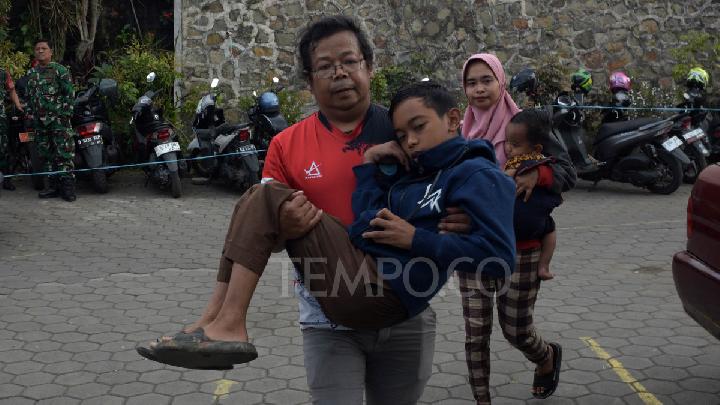
Komnas HAM documented hundreds of students — enrolled at Islamic boarding schools (pesantren) as well as conventional public and private schools — who fell ill after consuming MBG meals in September 2026. The affected locations spanned Sidoarjo Regency and Rembang Regency in East Java, Jombang Regency also in East Java, and Surakarta (commonly called Solo) in Central Java.
These September cases did not emerge in a vacuum. In August 2026, similar contamination events suspected of being linked to the same meal-distribution chain had already been reported in Jayapura, Papua, and in Semarang, Central Java. The geographic spread — from the island of Java to the eastern reaches of Papua — suggests that the problem is not confined to a single kitchen or a single supplier but is embedded in the program’s operational model.
Four Recommendations from the Commission
In its statement, Komnas HAM set out at least four concrete steps it expects the government to take. The most immediate was a demand that the National Nutrition Agency (BGN), the body tasked with administering the MBG program, halt operations at every kitchen serving meals at sites where poisoning has already occurred. Resumption, the commission implied, should follow only after a full corrective review.
Second, BGN was urged to carry out a comprehensive causal evaluation — not a superficial internal memo, but a thorough investigation capable of identifying whether the contamination stemmed from ingredient sourcing, preparation hygiene, transport conditions, or storage failures. Corrective measures, once identified, must be implemented and verified.
Third, the commission insisted that victims receive effective remedies, a phrase Uli deliberately broadened beyond the customary government response of issuing an apology and promising the event will not recur.
“This should not be limited to apologies and guarantees that the incidents will not happen again,” Uli said.
She added that the state bears full responsibility for the physical and psychological recovery of every affected child, including follow-up medical care and, where appropriate, compensation for lost school days and family disruption.
Fourth, Komnas HAM called on the national police and the Food and Drug Authority (BPOM) to pursue transparent, independent, and fair enforcement action against every party implicated in the contamination chain — suppliers, kitchen operators, transport contractors, and any oversight officials who failed to catch the problem before children sat down to eat.
Coordination and the Broader Question
Uli also pressed BGN to coordinate actively with provincial and municipal governments, the Ministry of Health, and BPOM so that oversight covers every stage of the pipeline: procurement, preparation, packaging, delivery, and final service to the plate. Without that end-to-end visibility, she argued, the next poisoning episode is a matter of timing, not probability.
The commission closed its statement with a pointed observation: the government’s well-intentioned effort to improve children’s nutrition must not come at the expense of their health, safety, or basic rights. In practical terms, that means the MBG program’s expansion timetable may need to slow until the sanitation and accountability architecture catches up with its geographic reach.
For families in the affected regencies, the question is no longer whether the program works in theory. It is whether the kitchens that feed their children each morning can be trusted to do so without putting those children in hospital. Until the answers come from transparent investigations and enforceable sanctions, the pattern Uli described will keep repeating — and every repetition, as Komnas HAM now insists, is a human-rights event, not merely a food-safety footnote.
Related Reading
Frequently Asked Questions
What is Komnas HAM?
Komnas HAM is the main topic of this guide. The article explains the context, practical details, and next steps readers should understand.
Why does Komnas HAM matter?
Komnas HAM matters because readers are looking for a useful answer, not just a short summary. Good content should match search intent and help them decide what to do next.