Malaysia’s King Approves Haze Emergency in Serian, Sarawak
The skies over Serian, a district in Sarawak's interior, have turned thick enough to trigger one of the most consequential constitutional tools available to
Serian Declared Under Emergency Status as Haze Chokes Sarawak’s Air
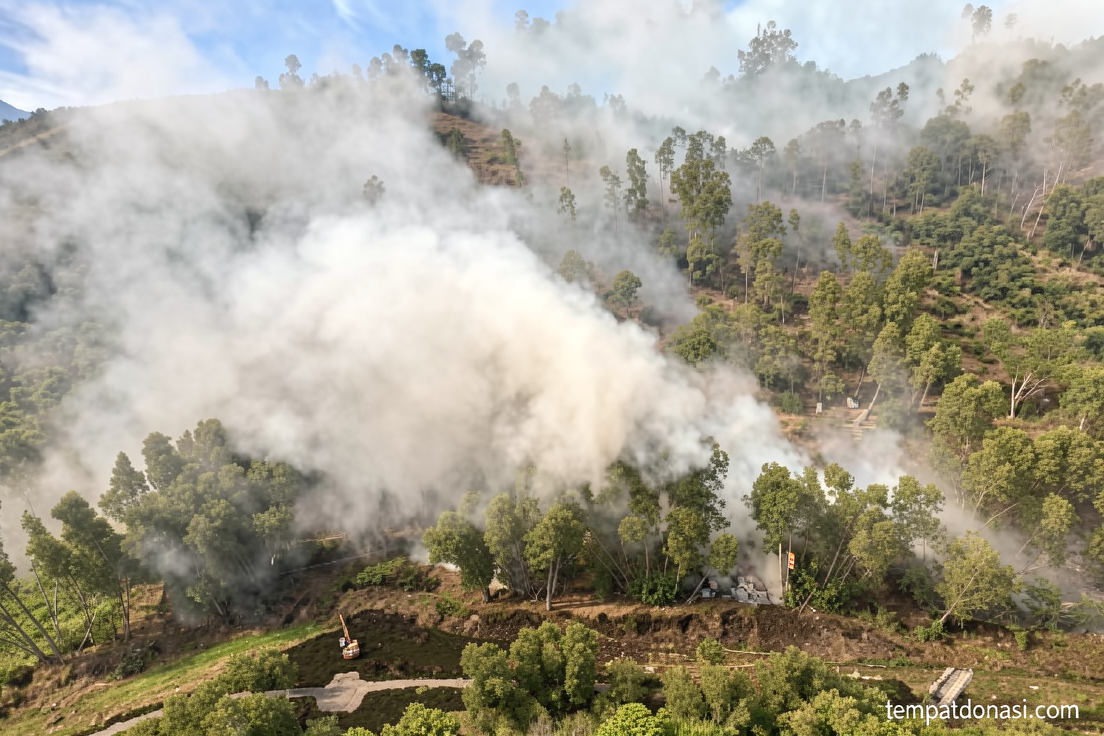
Tempatdonasi.com – The skies over Serian, a district in Sarawak’s interior, have turned thick enough to trigger one of the most consequential constitutional tools available to the Malaysian state. Sultan Ibrahim, serving as Yang di-Pertuan Agong — the country’s elected monarch — has given formal approval for a state of emergency to take effect across the entirety of the Serian region. The move comes after sustained haze pushed air-quality readings into ranges that authorities judged a direct threat to public health and everyday safety.
What the Declaration Means in Practice
In Malaysia’s constitutional architecture, a state of emergency is not a routine administrative step. It temporarily concentrates executive authority, allowing the government to issue directives that would ordinarily require legislative approval. In practice, such a declaration empowers local administrators to enforce curfews, restrict movement, allocate emergency resources, and coordinate medical responses without waiting for parliamentary debate. For a district like Serian, where communities rely on river transport and dispersed settlements, the practical effect is that officials can mobilize faster than normal bureaucratic channels would permit.
The Prime Minister’s Office confirmed the decision in a statement released in Kuala Lumpur on Saturday. The announcement noted that the approval came only after weighing input from the Prime Minister himself, Sarawak’s state leadership, and the technical agencies responsible for monitoring air quality in the region. That layered consultation underscores that the declaration was not a unilateral call but the product of multiple levels of government converging on the same assessment: conditions had crossed a threshold.
Why Sarawak’s Interior Is Especially Vulnerable
Serian sits in the heart of Sarawak, a state on the northern coast of Borneo whose interior is dominated by dense rainforest, peat swamps, and a network of rivers. When land-clearing fires — whether from agricultural burning, peat extraction, or uncontrolled waste disposal — ignite in nearby districts or across the border in Kalimantan, Indonesia, the resulting smoke can drift for hundreds of kilometers before settling over Sarawak’s low-lying valleys. The geography traps particulate matter at ground level, meaning that even moderate burning events upstream can produce locally severe pollution within days.
This pattern is not new. Since the late 1990s, Southeast Asian nations have grappled with transboundary haze episodes that recur roughly every two to three years, intensifying during dry seasons when winds carry smoke from one country’s plantations into another’s cities and towns. Sarawak, sharing a land border with Indonesian Kalimantan, has experienced repeated episodes in which visibility drops below one kilometer and hospital admissions for respiratory complaints spike within a week.
Government Response and Public Guidance
Alongside the emergency declaration, the federal government outlined a two-track response. First, it committed to implementing mitigation measures — actions aimed at reducing the source of the haze wherever feasible, including coordination with neighboring jurisdictions and enforcement against illegal burning. Second, it pledged to keep the public informed through regular updates on air-quality readings and targeted health advice, such as recommendations to limit outdoor activity, use masks, and seek medical attention if symptoms persist.
The government stated it would monitor ongoing developments and promptly implement all necessary actions, including mitigation measures, as well as disseminate information and health advice to the public.
For residents of Serian, the immediate practical guidance centers on reducing exposure: keeping windows sealed, running air purifiers where available, avoiding strenuous outdoor exercise during peak pollution hours, and watching for warning signs such as persistent coughing, eye irritation, or shortness of breath. Schools and workplaces in the affected zone are expected to adjust schedules in line with local directives issued under the emergency framework.
Broader Regional Implications
The declaration places renewed pressure on bilateral and multilateral mechanisms designed to manage transboundary haze. ASEAN’s 2002 Haze Agreement and subsequent action plans call for early warning, joint monitoring, and coordinated suppression of fires, yet enforcement remains uneven. When a Malaysian district reaches the point of requiring an emergency declaration, it signals that existing cooperative frameworks have not yet prevented conditions from deteriorating to a public-health crisis.
For Sarawak’s state government, the emergency status also opens channels for federal funding and logistical support that would otherwise be difficult to secure through routine budgetary processes. Medical supplies, portable air-quality monitors, and emergency communication equipment can be deployed more rapidly under the declaration’s legal umbrella.
As the haze persists, the coming days will test whether the emergency framework translates into tangible relief for Serian’s residents or remains, once again, a formal acknowledgment of a problem that regional cooperation has yet to solve at its source.
Related Reading
Frequently Asked Questions
What is Malaysia s King Approves Haze Emergency?
Malaysia s King Approves Haze Emergency is the main topic of this guide. The article explains the context, practical details, and next steps readers should understand.
Why does Malaysia s King Approves Haze Emergency matter?
Malaysia s King Approves Haze Emergency matters because readers are looking for a useful answer, not just a short summary. Good content should match search intent and help them decide what to do next.