Morocco’s First Female Leader: Symbol or Real Reform?
Morocco is preparing for a historic change in national leadership after King Mohammed VI selected Fatima Zahra Mansouri to become the country’s first woman to
Morocco’s New Female Prime Minister Faces Expectations Beyond Symbolism
Tempatdonasi.com – Morocco is preparing for a historic change in national leadership after King Mohammed VI selected Fatima Zahra Mansouri to become the country’s first woman to head the government. Mansouri, the mayor of Marrakesh and minister of planning, takes office at a moment when questions of representation, power and social change are being openly debated across the country.
For many Moroccans, the appointment carries clear emotional weight. It places a woman in the most prominent government position in a country where the monarchy retains decisive executive authority. Morocco holds elections and has a parliament, but the king has the final word in national politics. The head of government directs the cabinet, oversees the administration and carries out public policy within that system.
Public reaction has ranged from enthusiasm to caution. Some people see Mansouri’s arrival as a long-overdue opening for women in public life.
“It would be great if we had a female prime minister for a change. She’d lift our spirits a bit,” one woman said.
“Why don’t we give women a chance? We’ve never had one [a female head of government] before,” another said. “May God bless her and help her stay on a straight path.”
A man expressed a broader hope that the change would improve the country regardless of the person holding the post.
“Regardless of who takes on the role, it should be a change for the better in Morocco,” he said.
A historic appointment within a powerful monarchy
Mansouri was chosen ahead of Fouzi Lekjaa, Morocco’s football federation chief and budget minister. Both are senior figures in the Authenticity and Modernity Party, known as PAM, which won the largest number of seats in parliamentary elections held in September.
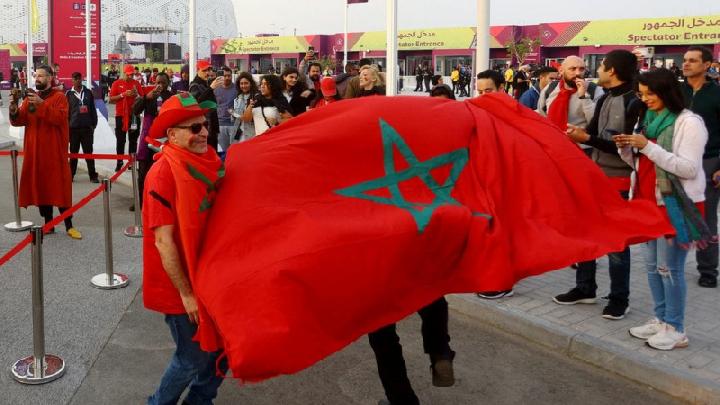
Her government is already being described informally as the “World Cup government.” Morocco will co-host the 2030 football World Cup with Spain and Portugal, requiring major investment and long-term planning. The scale of those preparations is likely to make economic coordination, infrastructure and public administration central to the government’s work.
Mansouri is also widely associated with leadership during the devastating earthquake that struck Morocco in 2023. That experience has added to perceptions of her as a practical political figure rather than a disruptive outsider.
Her appointment makes her the third woman to lead a government in the Arab world. Tunisia previously had two women in that role: Najla Bouden and the current prime minister, Sara Zaafarani. Their experience has strengthened discussion of whether women in visible leadership roles can alter public attitudes as well as political institutions.
Why visibility can matter
The symbolism of Mansouri’s appointment should not be dismissed simply because it does not automatically change policy. A 2022 Arab Barometer survey in Tunisia found a shift in attitudes toward women’s political leadership after women became heads of government. In 2022, 40% of respondents agreed that men are generally better political leaders than women, down from 56% four years earlier. Researchers described the change as a possible “role-model effect.”
Morocco has also seen changing views on women’s roles. A 2025 survey by Arab Barometer indicated that attitudes were evolving, and Mansouri’s prominence could contribute to that movement. Her position puts a woman at the center of government decision-making at a time when ordinary conversations about authority and gender are already becoming more visible.
Stephanie Willman Bordat, co-founder of Rabat-based advocacy group Mobilizing for Rights Associates, said the effect is already apparent in daily life.
“People in public spaces, in cafes, on trains on their commute and just regular folks are having conversations about women’s leadership and the taboo that says women can’t be heads of government or women can’t be bosses of men. There’s good public debate and dialogue on this.”
Bordat, who has lived in Morocco for two decades, also framed the appointment in an international context where women’s rights have faced setbacks in many places.
“And on a global level, in terms of women’s participation, this is really something to encouraging,” she said. “Especially when you look at the global climate of backlash and regression in women’s rights.”
Anja Freudenreich, who leads the Morocco office of Germany’s Friedrich Ebert Foundation in Rabat, said the response among Moroccans reflects both pride and skepticism. Some see a meaningful opportunity to strengthen women’s representation, while others believe the appointment may remain largely symbolic.
The limits of a symbolic breakthrough
Those doubts are rooted partly in Morocco’s political structure and partly in entrenched social expectations. Some residents have questioned how Mansouri will participate in official settings where tradition and protocol have historically centered men. One critic referred to the limited scope of the prime minister’s authority under the monarchy.
“People are saying that a nation cannot succeed if a woman is in charge, even if she’s only half in charge,” he said.
The remark captures the central tension surrounding Mansouri’s tenure. Her appointment is a breakthrough in representation, yet it does not transfer ultimate political power away from the king. Nor does it guarantee sweeping changes for Moroccan women in employment, family life, political participation or access to leadership positions.
Freudenreich has suggested that Mansouri is more likely to be a pragmatist than a political rebel. Her ability to work through established structures may help her manage questions of custom and protocol, but it may also limit expectations of a sharp departure from previous policy. PAM’s electoral manifesto did not set out an extensive agenda focused on women’s issues.
That does not make the appointment insignificant. Political change often develops through both policy and public imagination. A woman leading Morocco’s government can make a previously unimaginable role more familiar to girls, families, employers and future candidates. Whether that visibility becomes lasting reform will depend on the decisions of Mansouri’s government, the institutions around it and the public pressure that follows.
Related Reading
Frequently Asked Questions
What is Morocco s First Female Leader?
Morocco s First Female Leader is the main topic of this guide. The article explains the context, practical details, and next steps readers should understand.
Why does Morocco s First Female Leader matter?
Morocco s First Female Leader matters because readers are looking for a useful answer, not just a short summary. Good content should match search intent and help them decide what to do next.