Nepal: Two Pulled Alive from Tunnel Nine Days After Floods
Nepal - Two construction workers were extracted alive from a buried hydropower tunnel in Nepal on Friday, marking the first confirmed rescues from the
Nepal’s Flood-Stricken Tunnels Yield First Survivors After Nine Days
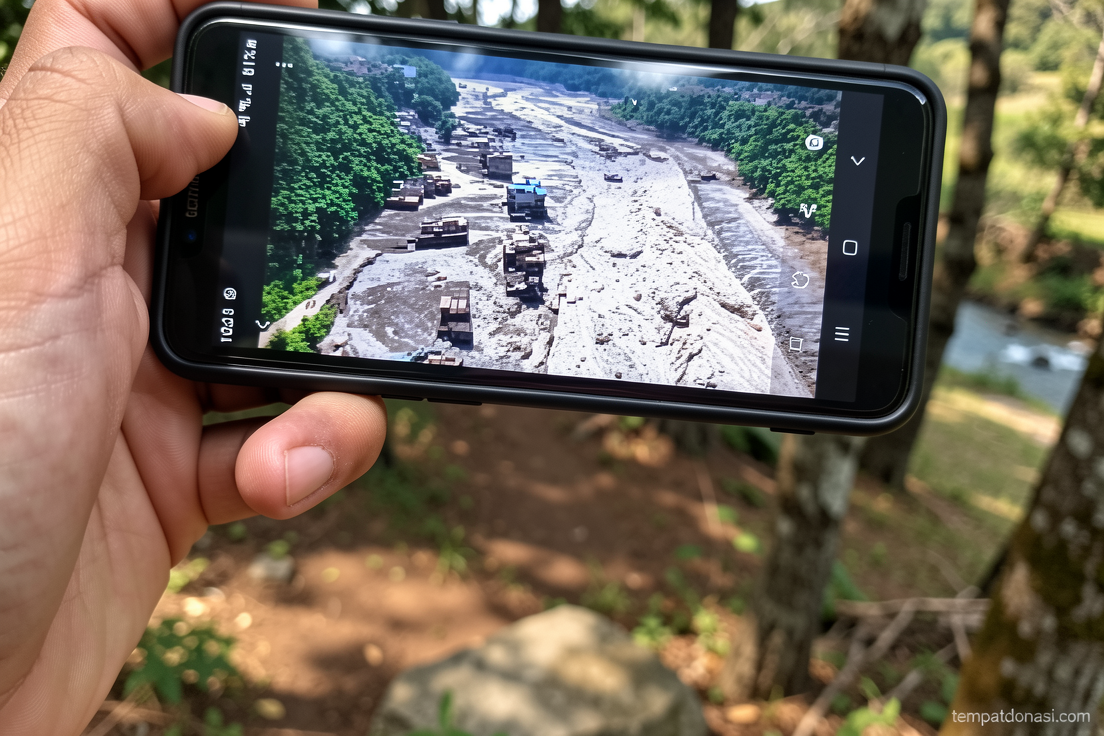
Tempatdonasi.com – Nepal – Two construction workers were extracted alive from a buried hydropower tunnel in Nepal on Friday, marking the first confirmed rescues from the catastrophic flooding that struck the country’s northern border region with China nine days earlier. The men had been trapped underground since the August 26 disaster, when a collapsing glacier sent a torrent of ice, rock, and mud cascading through towns and villages along the Trishuli River.
The rescued individuals were identified as Sanjay Shah, 30, a mechanical foreman, and Kabir Maharjan, 45, a mechanical supervisor, both employed at the Upper Trishuli 3A Hydropower Station. Their extraction came from a tunnel along the Trishuli River, following confirmation by the office of Energy Minister Biraj Bhakta Shrestha.
“As long as there is breath, there is hope!” Shrestha declared in a public statement. “Rescue operations are continuing in all the affected tunnels. Let everyone’s efforts and prayers continue. We have not lost hope.”
How the Rescue Unfolded
Authorities said rescue crews first detected human voices emanating from inside the tunnel on Friday morning. Visual documentation captured the moment Maharjan was hauled from a hole in the ground to the cheers of onlookers. He was then transferred onto a stretcher. Shah, whose face was caked in mud, was carried out on a fellow worker’s back to a nearby rescue tent, where military medics fitted him with an oxygen mask and assessed his vital signs.
An aide to the energy minister disclosed that Maharjan was unable to move his hands or legs at the time of extraction, while Shah’s injuries were not deemed life-threatening. Both men were airlifted to a hospital in Kathmandu for further treatment.
Family members expressed profound relief. Amir Maharjan, Kabir’s brother, spoke to reporters about the family’s emotional state: “I can’t explain what we are feeling at the moment. We are just grateful to god,” he said, adding that relatives were en route to the hospital to be with him.
The Broader Missing-Workers Crisis
These two rescues represent the first successful extractions linked to the hydropower projects along the Trishuli River. The scale of the entrapment remains staggering: local authorities estimate that as many as 900 workers remain missing across multiple project sites, with roughly 500 believed to be trapped inside tunnels.
At the Trishuli 3A project alone, the Independent Power Producers Association of Nepal placed the number of missing workers at 557, of whom approximately 115 are thought to be confined within the main tunnel. Emergency teams continue operations aimed at reaching those still underground.
Nepal’s communication minister, Bikram Timilsina, expressed continued optimism about finding additional survivors: “We are waiting for the rescue of more and more people,” he stated. A coordinating team of experts has been operating through a WhatsApp group to guide rescue crews on the ground, functioning as a critical communication tool alongside helicopters and heavy excavation machinery deployed at the sites.
Scale of Destruction
Nepal’s disaster management authority has estimated total damage to property, housing, and infrastructure at no fewer than 387.5 billion Nepalese rupees — approximately $2.56 billion. Dharma Raj Upreti, chief of the National Disaster Risk Reduction and Management Authority, provided the figure while noting that a more granular assessment would follow.
He outlined that the initial four-month early-recovery phase — encompassing road reconstruction, temporary shelter deployment, and restoration of water and electricity services — would require an estimated $52.6 million. “These are estimated amounts. We have calculated this in coordination with different concerned agencies and departments,” Upreti explained.
The rebuilding task is immense: approximately 20,000 houses in flood-affected areas will need reconstruction, with at least 7,500 structures destroyed outright.
Background: The Glacier Collapse and Its Aftermath
The disaster was triggered on August 26 by the collapse of a glacier situated upstream on the Trishuli River. The event released a massive wall of ice, rock, and mud that swept through settlements near the Nepal-China border at devastating speed. The Trishuli River basin, which drains from the Himalayan range, is a corridor of major hydropower infrastructure, making the region’s construction workforce particularly vulnerable to such sudden hydrological events.
Nepal’s disaster management agency has confirmed at least 1,259 fatalities within the country, with more than 5,000 people still listed as missing. On the Tibet side of the border, China reported 21 deaths and 541 missing persons as of late Wednesday.
The incident underscores the growing intersection between Nepal’s ambitious hydropower development program and the increasing frequency of glacier-related hazards in the Himalayan region. As the country continues to invest in large-scale water infrastructure to meet domestic energy demands and export electricity to neighboring grids, the vulnerability of tunnel-based construction sites to sudden hydrological events becomes an urgent planning consideration for engineers, regulators, and the communities that depend on these projects for employment.
Related Reading
Frequently Asked Questions
What is Nepal?
Nepal is the main topic of this guide. The article explains the context, practical details, and next steps readers should understand.
Why does Nepal matter?
Nepal matters because readers are looking for a useful answer, not just a short summary. Good content should match search intent and help them decide what to do next.