
New Crew Makes the Quickest US Flight to ISS
Four astronauts have arrived at the International Space Station after a remarkably short journey from Florida, completing the fastest trip to the orbiting
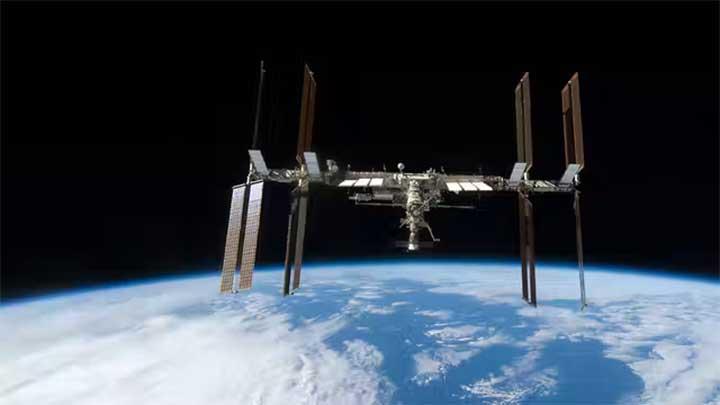
SpaceX Crew Reaches International Space Station in Record US Transit
Tempatdonasi.com – Four astronauts have arrived at the International Space Station after a remarkably short journey from Florida, completing the fastest trip to the orbiting laboratory ever achieved by a US spacecraft. The SpaceX Dragon capsule, named “Grace,” reached the station less than eight hours after launch, marking a new milestone for American crewed spaceflight.
The Crew-13 mission lifted off aboard a SpaceX Falcon 9 rocket from Cape Canaveral, Florida, at 11:10 a.m. local time, or 1510 GMT, on Thursday. After traveling for 7 hours and 55 minutes, the Dragon capsule successfully docked with the ISS.
The result is the quickest journey to the station by an American spacecraft, surpassing previous flights conducted by both SpaceX and NASA. It also stands in sharp contrast to the most recent US crewed mission to the ISS, which required more than 30 hours to complete its approach and docking.
Why This Flight Took Less Than Eight Hours
The speed of a trip to the International Space Station is not determined simply by the power of the launch rocket. A major factor is the relative position of the spacecraft and the station at liftoff. The ISS circles Earth at roughly 400 kilometers above the planet, moving at an extremely high orbital speed. A spacecraft must launch into the correct orbital plane and carry out a carefully timed series of maneuvers to catch it.
For Crew-13, the station’s position created an especially favorable launch opportunity. With the ISS located along a convenient orbital path, Dragon needed less time to adjust its course and close the distance. Such alignment can reduce travel time substantially, although a faster arrival is not always possible for every mission.
Even with the new US record, the overall benchmark for reaching the ISS remains held by Russia’s Soyuz program. In October 2020, a Soyuz spacecraft arrived at the station in a little more than three hours. The shortened Soyuz profile depended on a similarly precise orbital alignment and a rapid sequence of rendezvous operations.
Crew-13 Begins Six-Month Station Assignment
The newly arrived team includes NASA astronauts Jessica Watkins and Luke Delaney, Canadian astronaut Joshua Kutryk, and Russian cosmonaut Sergey Teteryatnikov. Their mission is expected to last about six months, during which they will live and work aboard the space station alongside the other residents of the orbital complex.
Watkins serves as commander of Crew-13 and has made history as the first Black woman to lead a crew into orbit. Her role places her in charge of the mission’s overall operations during launch, docking, return preparations, and the crew’s work while in space.
The crew had originally been scheduled to reach the station in mid-September. That timetable changed after a leak was identified aboard the Dragon spacecraft, prompting a delay before the mission could proceed. Launching only after the issue was addressed helped ensure that the vehicle was ready for its trip and for its planned stay attached to the ISS.
Crew-13 will take over responsibilities from Crew-12, whose members are scheduled to depart the station and return to Earth on Monday. Crew changes at the ISS are designed to preserve a continuous human presence, allowing outgoing astronauts to hand over experiments, equipment status, and operational knowledge to the incoming team.
A Long-Running International Laboratory
The International Space Station has remained continuously occupied for 25 years. It functions as a scientific laboratory, an engineering test site, and a platform for studying how people and technology perform during long periods in microgravity. Research conducted there can involve human health, materials, biology, Earth observation, and systems needed for future exploration missions.
NASA has committed to operating the station through 2030. The program depends on cooperation among multiple partners, including the United States, Russia, Canada, Japan, and European nations. That collaboration has continued aboard the ISS despite the severe strain placed on many international relationships following Russia’s full-scale invasion of Ukraine in 2022.
The presence of both American and Russian crew members on Crew-13 reflects the continuing operational partnership required to keep the station functioning. Different partners provide major elements of the complex, transportation capabilities, crew members, research programs, and technical support. Maintaining those shared systems requires regular coordination even during periods of political tension on Earth.
What the Record Means for Future Missions
The rapid arrival of Dragon “Grace” demonstrates the flexibility of modern commercial crew operations when launch conditions and orbital timing align. It does not mean that every future mission will follow the same accelerated schedule, since the station’s location changes continuously as it circles Earth.
Still, the mission highlights how launch planning, spacecraft navigation, and station operations have evolved. A journey that once routinely took several days can, under the right conditions, be completed within a single workday. For astronauts, a shorter flight can mean less time confined inside the capsule before beginning their work in orbit.
For Crew-13, the record-setting transit is only the opening chapter of a much longer assignment. The four astronauts now begin months of scientific work and station maintenance before their eventual return to Earth, while the ISS continues its role as humanity’s longest-running home in space.
Related Reading
Frequently Asked Questions
What is New Crew Makes the Quickest US Flight?
New Crew Makes the Quickest US Flight is the main topic of this guide. The article explains the context, practical details, and next steps readers should understand.
Why does New Crew Makes the Quickest US Flight matter?
New Crew Makes the Quickest US Flight matters because readers are looking for a useful answer, not just a short summary. Good content should match search intent and help them decide what to do next.