
Pakistan vs. Afghanistan: From Allies and Neighbors to War
Relations between Pakistan and Afghanistan have deteriorated sharply after Pakistan carried out strikes inside Afghanistan on Thursday night, deepening a
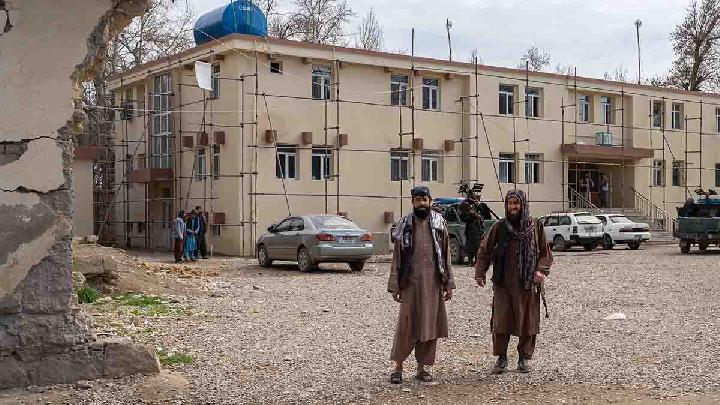
Pakistan and Afghanistan Face Renewed Conflict Along a Fraught Border
Tempatdonasi.com – Relations between Pakistan and Afghanistan have deteriorated sharply after Pakistan carried out strikes inside Afghanistan on Thursday night, deepening a confrontation that has intensified since mid-September.
The consequences of the operation remain contested. Afghanistan’s Taliban authorities said nine to 10 civilians, including women and children, were killed. Pakistan said its forces killed 22 militants and hit weapons and ammunition storage sites.
The incident followed weeks of rising violence linked to attacks on Pakistani security personnel. A major attack on September 18 at a police compound in Kohat, a northwestern Pakistani city, left 31 people dead and more than 100 injured. A faction connected to Tehreek-e-Taliban Pakistan, widely known as the TTP or Pakistani Taliban, claimed responsibility.
Kohat lies in Khyber Pakhtunkhwa, the Pakistani province adjoining Afghanistan. Islamabad has accused the Afghan Taliban of allowing TTP fighters to find refuge across the border. Taliban officials reject that allegation, but the dispute has since moved from accusations and border clashes to airstrikes.
Two Taliban movements, but separate agendas
The TTP should not be treated as an extension of Afghanistan’s Taliban government. The two groups share ideological affinities and personal links, yet the TTP remains an independent organization whose campaign is directed at the Pakistani state.
During the long war against international and US-led forces in Afghanistan, many TTP fighters supported the Afghan Taliban. When the Taliban returned to power in Kabul in 2021, the TTP gained greater operational room and political leverage. That shift has transformed Afghanistan from a former Pakistani partner into an increasingly serious security concern for Islamabad.
Pakistan has pressed the Taliban government to act against the TTP. However, the relationships between members of the two movements make a clean break difficult, even if those relationships do not mean Kabul commands the Pakistani group.
“Because of these personal connections and networks, it is extremely difficult for the Afghan Taliban to break away,” says Conrad Schetter, director of the Bonn International Center for Conflict Studies.
Schetter has cautioned that historical and personal ties should not be mistaken for direct Taliban control over the TTP. The Afghan Taliban may have links to the group, but that does not necessarily give them strong influence over its decisions or attacks.
“The Taliban are simply not prepared to take orders from Islamabad,” says Thomas Ruttig, co-director of the Afghanistan Analysts Network. “They won’t let anyone outside interfere.”
For Pakistan, this represents a major reversal. Its longstanding approach of supporting the Afghan Taliban in hopes of gaining influence in Afghanistan has not produced the security outcomes Islamabad expected.
The Durand Line remains a source of tension
Today’s hostilities also rest on a much older dispute over the border itself. Pakistan and Afghanistan are divided by the Durand Line, a boundary established in 1893 by a British diplomat and an Afghan emir to define areas of influence between British India and Afghanistan.
The modern frontier follows that colonial-era line through land inhabited on both sides by Pashtuns. Pashtuns are Afghanistan’s largest ethnic community and Pakistan’s second largest. For many people in the region, the disagreement is therefore not only about territory, checkpoints, or cross-border movement. It is also connected to identity, family ties, and competing national claims.
“Ethnic and nationalist elements play a significant role in the conflict,” Schetter says.
Many Pashtuns have never accepted the boundary created by the Durand Line. That reality makes security measures along the frontier politically sensitive and helps explain why even limited clashes can rapidly carry wider implications.
Regional rivalries add pressure
Pakistan’s tensions with India are another part of the strategic picture. Islamabad long viewed a cooperative Afghanistan as useful in its rivalry with New Delhi, often describing such an outcome as providing “strategic depth.”
That calculation has become less convincing as India has strengthened its engagement with the Taliban. Afghanistan is increasingly seen in Pakistan not as a strategic advantage, but as a source of instability on its northwestern border.
The situation is especially difficult because Afghanistan is landlocked and remains dependent on trade routes through surrounding states, particularly Pakistan. Border closures and restrictions on commerce give Islamabad a means of applying pressure on Kabul.
At the same time, Taliban authorities have sought to reduce their reliance on Pakistan by developing other economic and political relationships. This makes trade access, border security, and militant violence part of the same larger dispute.
Dialogue Has Not Resolved the Security Question
There have been efforts to prevent the conflict from worsening. Pakistan has held TTP talks mediated by the Afghan Taliban, and temporary ceasefires were reached. Pakistani and Afghan representatives have also held discussions.
None of those arrangements has settled the central issue: how to stop attacks on Pakistani territory while addressing Kabul’s insistence that it cannot simply act on Islamabad’s instructions. As violence resumes, the risk is that each new attack, border incident, or airstrike will make negotiations harder and increase the danger for civilians living near the frontier.
Related Reading
Frequently Asked Questions
What is Pakistan vs Afghanistan?
Pakistan vs Afghanistan is the main topic of this guide. The article explains the context, practical details, and next steps readers should understand.
Why does Pakistan vs Afghanistan matter?
Pakistan vs Afghanistan matters because readers are looking for a useful answer, not just a short summary. Good content should match search intent and help them decide what to do next.