Prabowo Courts Russian Firms to Develop 138 Energy Blocks in Indonesia
Indonesia's President Prabowo Subianto used the stage of the Eastern Economic Forum in Vladivostok to extend a sweeping invitation to Russian energy
Indonesia Opens 138 Energy Blocks to Russian Investors at Vladivostok Forum
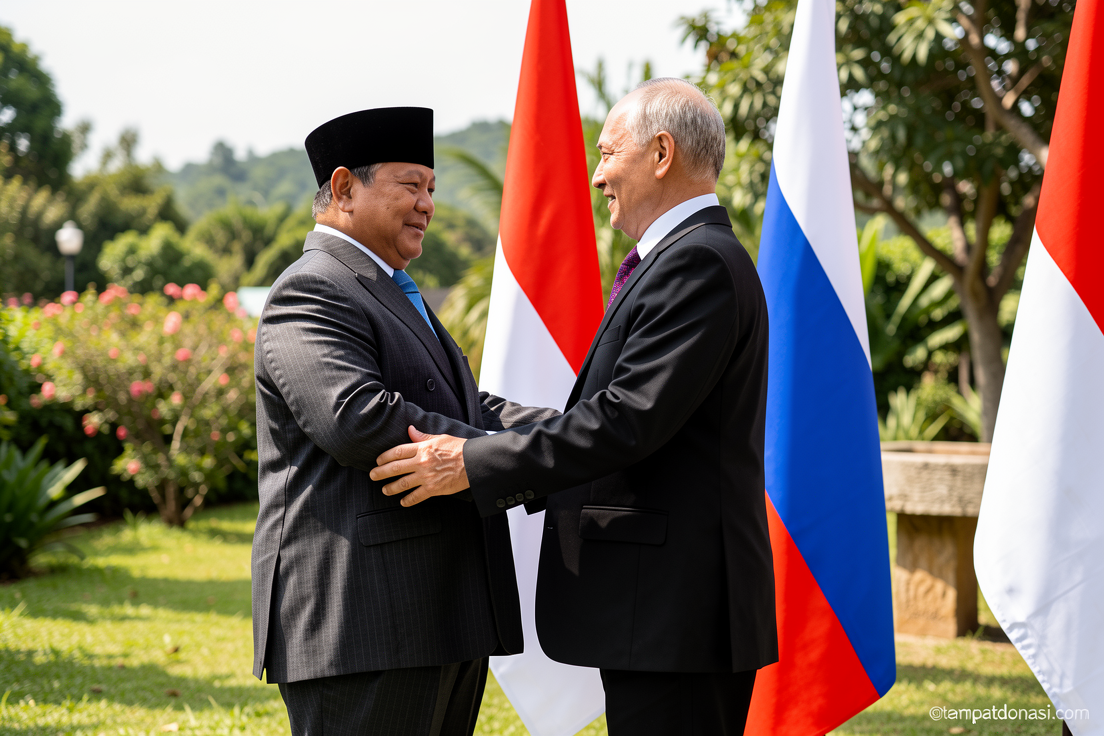
Tempatdonasi.com – Indonesia’s President Prabowo Subianto used the stage of the Eastern Economic Forum in Vladivostok to extend a sweeping invitation to Russian energy companies, asking them to participate in the exploration and development of 138 newly opened hydrocarbon blocks across the archipelago. Speaking on Thursday, Prabowo framed the overture as part of a broader strategy to diversify Indonesia’s energy partnerships beyond its traditional Western and East Asian partners, while leveraging Russian expertise in upstream extraction and downstream processing.
“We have just informed our Russian partners that Indonesia has now opened 138 energy exploration blocks, and we invite Russian groups, Russian companies, and their technology to be involved in those 138 blocks.”
The announcement lands at a moment when Jakarta is aggressively courting foreign capital to meet surging domestic energy demand. Indonesia’s population of over 280 million continues to drive growth in electricity consumption, industrial output, and transportation fuel needs. The government’s decision to release 138 blocks for competitive bidding signals an intent to accelerate exploration activity in underexplored basins, particularly in deepwater areas of the Natuna Sea, the Java Sea, and the Makassar Strait. By explicitly naming Russian firms, Prabowo signals that Moscow’s state-backed and private energy players are welcome competitors in those tenders, alongside established operators from Norway, the United States, Japan, and South Korea.
Joint Ventures in Refining and Storage
Beyond upstream exploration, Prabowo outlined ongoing negotiations with Russian groups on downstream infrastructure. Specifically, he referenced discussions about building refineries and storage terminals in partnership with Russian partners. Indonesia currently imports a significant share of its refined petroleum products, including gasoline and diesel, because domestic refining capacity has not kept pace with consumption growth. New joint refineries could reduce that import dependency and lower logistics costs for provinces outside Java.
“I think we’re considering all prospects. We’re discussing cooperation with Russian groups to develop joint projects, such as refineries and storage terminals in the energy sector.”
Prabowo acknowledged, however, that Indonesia’s existing liquefied natural gas (LNG) supply is sufficient for many sectors, meaning that a wholesale shift to Russian pipeline gas is neither necessary nor imminent. Nevertheless, he emphasized that Jakarta remains receptive to Russian engineering know-how, drilling technology, and project-finance structures that could complement domestic capabilities.
Fertilizer Production in the Russian Far East
The Vladivostok remarks extended well beyond hydrocarbons. Prabowo disclosed that a memorandum of understanding had been signed between an Indonesian fertilizer producer and one of Russia’s largest business conglomerates to co-invest in a gas-based fertilizer manufacturing facility located in the Russian Far East. The arrangement would allow Indonesian capital to gain exposure to low-cost natural gas feedstock while Russian partners contribute industrial-scale processing expertise.
“So, these projects are going very well and have progressed quite far.”
For Indonesia, which imports substantial volumes of urea and ammonium nitrate to support its rice and palm-oil sectors, securing a stake in overseas fertilizer capacity represents a strategic hedge against volatile global fertilizer prices. The Far East location also shortens shipping distances to Indonesian ports compared with plants in Western Europe or North America.
Rusal’s Entry into Indonesian Aluminum Processing
In the mining and metals-processing domain, Prabowo highlighted a collaboration with Rusal, Russia’s largest aluminum producer. He stated that Rusal intends to enter Indonesia on a large scale to build refineries in partnership with Indonesian groups. Indonesia possesses significant bauxite reserves, particularly in Kalimantan and Papua, but has historically exported raw ore rather than processing it domestically. A Rusal-backed refinery would add value domestically, create industrial employment, and reduce the country’s reliance on imported refined aluminum for construction and manufacturing.
“Rusal will enter Indonesia on a large scale to develop refineries with Indonesian groups.”
Broader Strategic Context
The Vladivostok overture fits within a wider pattern of Indonesian statecraft that seeks to balance relationships among major powers without formal alignment. Jakarta has simultaneously deepened energy ties with Japan, Australia, and the United States while maintaining diplomatic and commercial channels with Moscow. By inviting Russian technology and capital into specific, project-based partnerships rather than broad strategic entanglements, Prabowo’s administration appears to be pursuing a pragmatic, sector-by-sector approach.
The Eastern Economic Forum itself, hosted annually in Vladivostok, has become a key venue where Russia pitches its Far East development agenda to Asian investors. Indonesia’s visible participation at the 2024 edition underscores Jakarta’s willingness to engage with Russian economic initiatives even as global attention remains fixed on the Ukraine conflict. For Indonesian policymakers, the calculus is straightforward: energy security, industrial upgrading, and agricultural input costs are domestic priorities that transcend geopolitical positioning.
“So, we are still looking forward to more cooperation between Russia and Indonesia.”
Whether the 138-block invitation translates into concrete Russian participation will depend on tender timelines, sanctions-related financing constraints, and the competitive dynamics among bidders. Yet the signal from Vladivostok is unambiguous: Indonesia wants Russian energy technology at the table, and it wants it now.
Related Reading
Frequently Asked Questions
What is Prabowo Courts Russian Firms to Develop 138?
Prabowo Courts Russian Firms to Develop 138 is the main topic of this guide. The article explains the context, practical details, and next steps readers should understand.
Why does Prabowo Courts Russian Firms to Develop 138 matter?
Prabowo Courts Russian Firms to Develop 138 matters because readers are looking for a useful answer, not just a short summary. Good content should match search intent and help them decide what to do next.