Prabowo Plans Budget Cuts for TNI-Police
Prabowo Plans Budget Cuts for TNI Police -
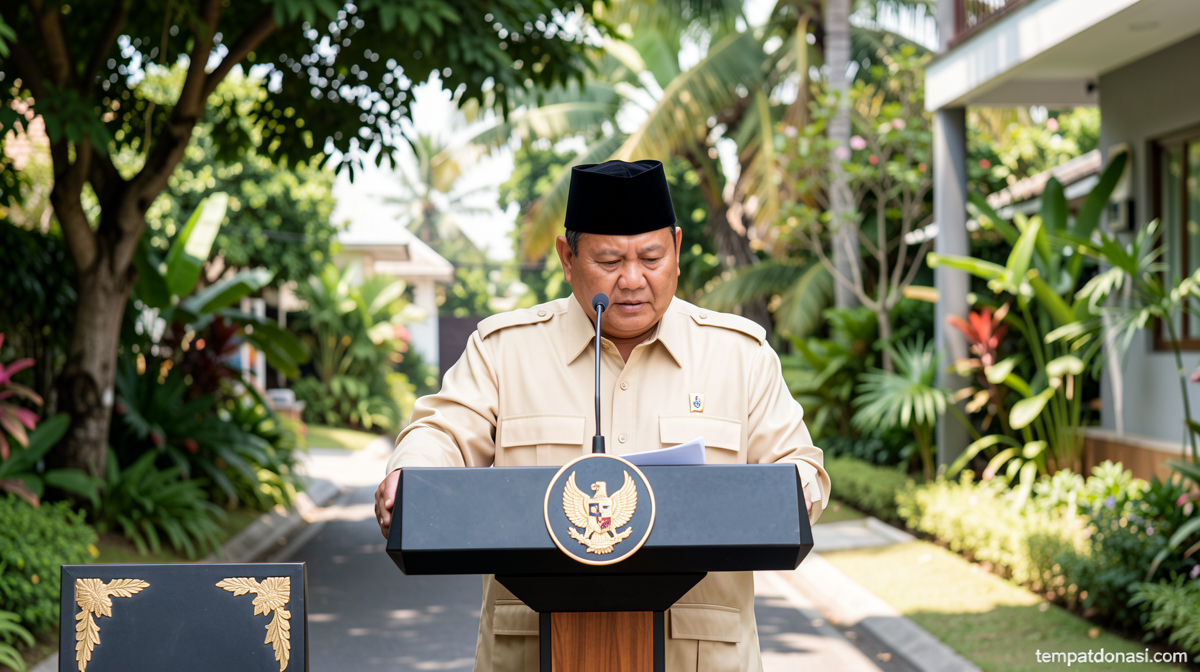
President Prabowo Outlines Strategic Financial Reductions for Military and Police Forces
Malang Festival Announcement Reveals Poverty-Focused Economic Strategy
Tempatdonasi.com – President Prabowo Subianto has formally announced plans to implement budget reductions for both the Indonesian National Armed Forces (TNI) and the national police force. This significant policy initiative, which represents a shift in how the government allocates resources, was unveiled during the TNI harvest festival in Malang, East Java. The president emphasized that these financial adjustments are not merely about cost-cutting, but rather about redirecting funds toward poverty eradication programs that will benefit millions of Indonesian citizens. By prioritizing social welfare over institutional spending, Prabowo aims to create a more equitable distribution of national resources.
The announcement came on Friday, July 17, 2026, during a live broadcast on the Presidential Secretariat’s official YouTube channel. In his address, the president articulated a clear vision for economic efficiency within Indonesia’s security apparatus. He explained that reducing expenditures in defense and policing sectors would generate substantial savings that could be channeled into critical social programs. These programs include food security initiatives, education funding, and healthcare improvements for underserved communities. The president stressed that this approach reflects his administration’s commitment to placing citizens’ wellbeing at the center of national policy decisions.
“We will save the budget, we will make it more efficient. If necessary, we will reduce the defense and police budget to eradicate poverty,” said Prabowo on Friday, July 17, 2026.
Security Leaders Respond to Presidential Initiative
The Malang event brought together Indonesia’s most senior security officials, creating an opportunity for direct dialogue between the president and military-police leadership. General Agus Subiyanto, the TNI Commander, attended alongside Deputy Commander General Tandyo Budi Revita. The gathering also featured Army Chief of Staff General Maruli Simanjuntak, Navy Chief of Staff Admiral Muhammad Ali, and Air Force Chief of Staff Marshal Mohammad Tonny Harjono. Additionally, National Police Chief General Listyo Sigit Prabowo was present to represent law enforcement interests in the discussion.
During the festival, President Prabowo engaged directly with these commanders, asking whether they would willingly accept reduced funding allocations. His questions were straightforward and repeated for emphasis: Are TNI and police willing? Will you reduce the budget willingly? Willingly? The president’s approach demonstrated both confidence in his leadership and respect for the professional judgment of military and police leaders. He acknowledged that while budget cuts might present challenges, they could ultimately strengthen organizational efficiency and demonstrate commitment to national priorities.
“Are TNI and police willing? Will you reduce the budget willingly? Willingly?” asked Prabowo.
The proposed budget reductions represent a significant policy direction for Indonesia’s security sector. Military and police officials must now consider how to maintain operational effectiveness while accepting potentially lower funding levels. This transition requires careful planning and coordination across all branches of the armed forces and police departments. The success of this initiative will depend on how well security agencies can adapt their operations to new financial realities while continuing to serve the nation’s safety and security needs.
Observers note that this announcement aligns with broader economic reforms being implemented by the Prabowo administration. By demonstrating willingness to make sacrifices within powerful institutions, the president is setting an example for other sectors of government. The TNI and police, as pillars of national stability, play crucial roles in implementing these reforms. Their cooperation and flexibility will be essential in ensuring that budget cuts translate into meaningful benefits for Indonesian citizens, particularly those living in poverty and economic hardship across the archipelago.