Prabowo Says Disaster Mitigation Budget Must Be Increased
With earthquakes shaking the eastern islands, a restless volcano spewing ash over the Sunda Strait, and smoke choking skies across multiple provinces
Indonesia’s President Demands Major Budget Overhaul for Disaster Preparedness Amid Wave of Natural Catastrophes
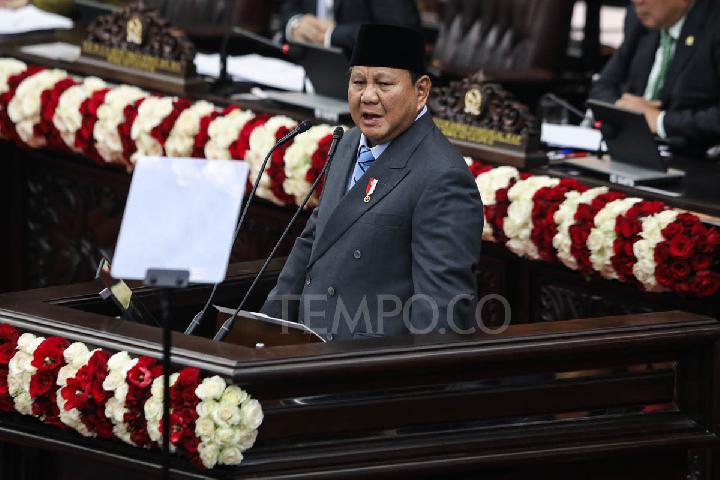
Tempatdonasi.com – With earthquakes shaking the eastern islands, a restless volcano spewing ash over the Sunda Strait, and smoke choking skies across multiple provinces, President Prabowo Subianto has issued an unambiguous directive: Indonesia’s disaster mitigation funding must be raised sharply, and the state must stockpile resources before the next catastrophe strikes rather than scrambling after the fact. Speaking from Merdeka Palace in Jakarta on Monday, September 7, 2026, Prabowo framed the budget increase not as a discretionary policy choice but as an operational necessity born from the country’s current crisis load.
“We must be ready to face situations like this at any time. This is also a lesson for us and for the government I lead: the budget allocation for disaster mitigation must be increased significantly.”
The remarks came during a virtual limited meeting on disaster management, convened to coordinate the government’s response to overlapping emergencies. The format — a closed-door digital session rather than a public press conference — underscored the urgency with which the administration is treating the simultaneous disasters now consuming national attention.
A Nation Under Multiple Simultaneous Threats
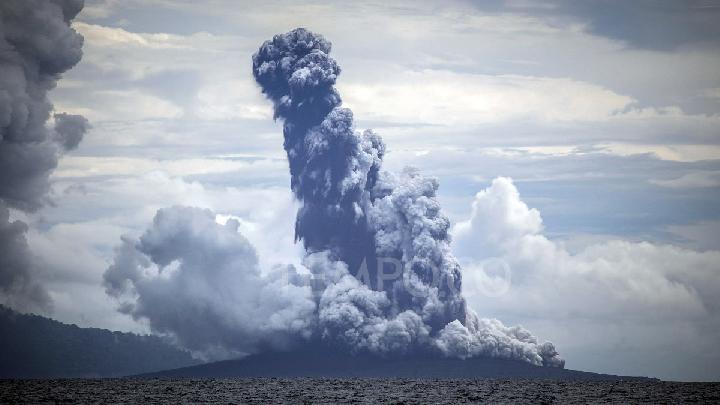
Indonesia is currently managing at least four distinct disaster fronts. In Flores, East Nusa Tenggara, a magnitude 7.7 earthquake has triggered search-and-rescue operations, infrastructure assessments, and displacement of local communities. Meanwhile, Mount Anak Krakatau, the young volcanic island sitting in the narrow waterway between Java and Sumatra, continues its active eruptive phase, prompting flight-path disruptions and coastal evacuation protocols. Across Sumatra, Kalimantan, and parts of Java, forest and land fires are generating hazardous haze that degrades air quality and threatens respiratory health. These layered emergencies have stretched response agencies to their operational limits and exposed gaps in equipment availability and inter-agency coordination.
Geography as a Standing Risk
Prabowo pointed to the fundamental reason Indonesia cannot treat disaster preparedness as a seasonal or episodic concern: the archipelago sits squarely within the Pacific Ring of Fire, a horseshoe of tectonic plate boundaries that generates the majority of the world’s earthquakes and volcanic eruptions. More than 400 active volcanoes dot the Indonesian archipelago, and the country’s thousands of islands are subject to tsunamis, landslides, cyclones, and drought-driven fires in varying combinations from year to year. The president argued that this geographic reality obliges the state to maintain a standing inventory of response assets — helicopters, pumps, fire engines, communication systems — at levels above the bare minimum, so that when an event occurs, units can deploy within hours rather than days.
Coordinated Resource Planning Ordered
To translate the budget directive into actionable procurement, Prabowo instructed State Secretary Prasetyo Hadi to open immediate coordination with Finance Minister Purbaya Yudhi Sadewa and National Development Planning Minister Rachmat Pambudy. The three offices are tasked with drafting disaster mitigation plans that explicitly budget for resource levels exceeding minimum thresholds. The instruction signals a shift from reactive, event-triggered spending toward a standing-capacity model in which equipment is purchased, maintained, and positioned before a crisis materializes.
“More helicopters are better, more water pumps are better, and more fire engines are better. We are ready before an incident occurs.”
Pushing Equipment Down to the Village Level
Beyond national-level assets, Prabowo directed that small excavators be procured and stationed at the village level, with priority given to communities in regions that experience recurrent forest and land fires. The rationale is straightforward: in remote or roadless areas, the first hours after ignition determine whether a fire is contained or escalates into a multi-week event. Village-level mechanical capacity reduces dependence on provincial or national units arriving after the fire has already spread beyond containment.
Italian Aircraft Carrier Repurposed for Disaster Operations
In a move that blends naval acquisition with civil-protection planning, Prabowo disclosed that the government intends to employ an Italian aircraft carrier — expected to enter Indonesian Navy service — as a floating platform for disaster response. The vessel would be adapted to host helicopter and drone operations, with capacity for up to ten medium-sized helicopters. Each of those aircraft could carry approximately four to five tons of water, enabling sustained aerial firefighting sorties over extended periods without the logistical constraints that limit fixed-base operations. The concept effectively converts a military asset into a mobile aerial-water-dropping hub capable of reaching remote island communities and inaccessible forest tracts.
Weather Modification Under Scientific Review
The president also signaled expanded use of aircraft for weather-modification operations — the controlled seeding of clouds to induce rainfall or suppress fire-favorable conditions. He tasked the National Research and Innovation Agency (BRIN) with determining which seeding materials would prove most effective under Indonesian atmospheric conditions. The study is intended to move the program from experimental pilots toward operational deployment, though the scientific community continues to debate the efficacy and environmental footprint of large-scale cloud seeding.
“We need to prepare for mitigation, not wait for an incident to happen. We have to prepare well in advance.”
Broader Implications
The budget directive arrives at a moment when Indonesia’s disaster-management architecture is already under strain. The simultaneous activation of earthquake response, volcanic monitoring, and fire suppression has highlighted chronic shortages of rotary-wing aircraft, water-dropping capacity, and ground-level firefighting equipment outside major urban centers. By tying the increase to a named coordination mechanism across the State Secretariat, the Finance Ministry, and the planning ministry, the administration is attempting to close the gap between political will and procurement execution. Whether the resulting master plan — encompassing additional equipment, facilities, and village-level assets — materializes within the current fiscal cycle remains the question that will define the policy’s credibility in the months ahead.
Related Reading
Frequently Asked Questions
What is Prabowo Says Disaster Mitigation Budget Must?
Prabowo Says Disaster Mitigation Budget Must is the main topic of this guide. The article explains the context, practical details, and next steps readers should understand.
Why does Prabowo Says Disaster Mitigation Budget Must matter?
Prabowo Says Disaster Mitigation Budget Must matters because readers are looking for a useful answer, not just a short summary. Good content should match search intent and help them decide what to do next.