Prabowo Seeks to Double Indonesia-Russia Trade Through I-EAEU FTA
Speaking at the 11th Eastern Economic Forum in Vladivostok on Thursday, Indonesian President Prabowo Subianto laid out an ambitious commercial target:
Indonesia and Russia Aim to Double Bilateral Trade Under New Free Trade Framework
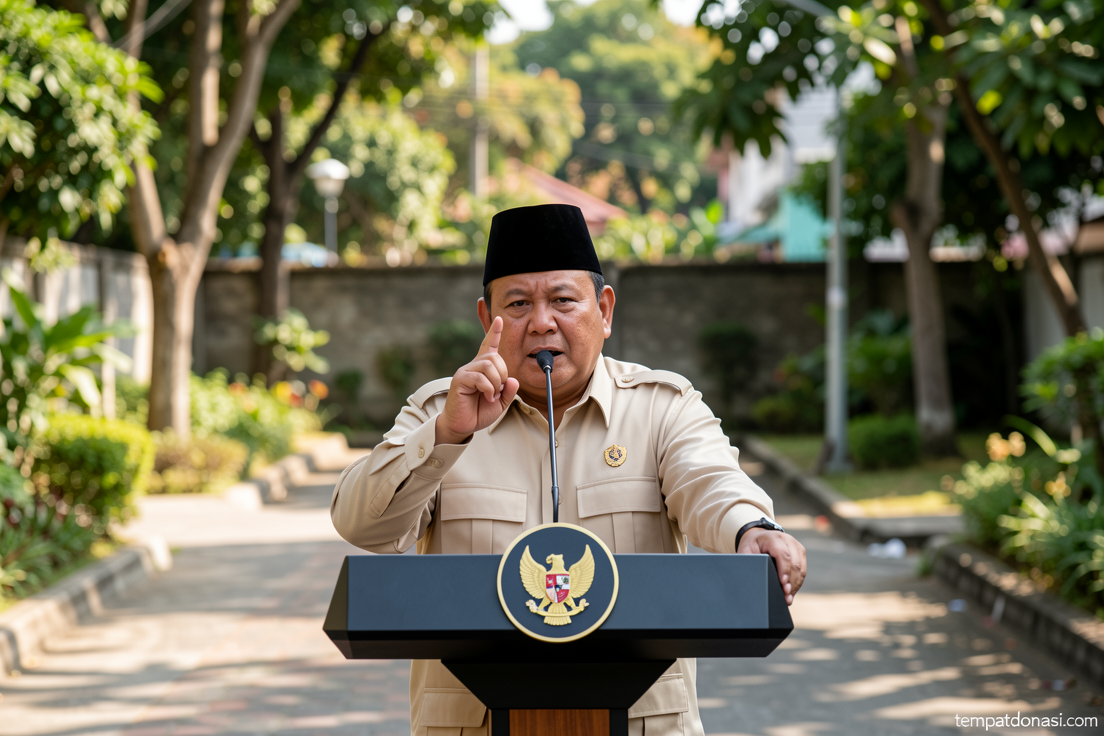
Tempatdonasi.com – Speaking at the 11th Eastern Economic Forum in Vladivostok on Thursday, Indonesian President Prabowo Subianto laid out an ambitious commercial target: doubling the annual trade flow between Jakarta and Moscow during the first review window of the Indonesia-Eurasian Economic Union Free Trade Agreement. The proposal, delivered before an audience of Russian and Eurasian business leaders, signals a decisive shift in how Indonesia positions itself within the broader Eurasian economic architecture.
“In this forum, I propose that Indonesia and Russia set a clear challenge for us to double our trade within the first review period of the Indonesia-Eurasian Economic Union Free Trade Agreement.”
The timing of the announcement carries weight. Bilateral trade between the two nations is projected to reach approximately US$5 billion in 2025, representing a year-on-year increase of 21.7 percent over 2024 figures. Prabowo framed this upward trajectory not as an anomaly but as evidence of structural complementarity between the two economies — a foundation he argued can be accelerated through formalized trade rules.
The Agreement’s Timeline and Strategic Logic
The I-EAEU FTA is scheduled to enter into force in 2027. Until that date, trade between Indonesia and the EAEU bloc — which includes Russia, Belarus, Kazakhstan, Armenia, and Kyrgyzstan — operates under a patchwork of bilateral arrangements and multilateral commitments. The forthcoming agreement would consolidate tariff preferences, harmonize rules of origin, and create predictable regulatory channels for goods and services moving across the Eurasian corridor.
Prabowo’s doubling target effectively implies pushing annual bilateral trade from the current US$5 billion band toward US$10 billion within the first review cycle. Achieving that step-change would require not only tariff liberalization but also investment flows, logistics upgrades, and alignment of standards across sectors where the two sides hold asymmetric advantages.
Complementary Strengths: What Each Side Brings
Prabowo outlined the economic case in sectoral terms. On the Indonesian side, he highlighted palm oil, coffee, fisheries, natural rubber, textiles, consumer goods, and a young, expanding labor force. These categories represent Indonesia’s comparative advantages in tropical agriculture, light manufacturing, and labor-intensive production.
On the Russian side, the president pointed to wheat, fertilizer, energy commodities, and advanced science and engineering technology. Russia’s position as a top global grain exporter and a major supplier of potash and nitrogen-based fertilizers makes it a natural counterpart to Indonesia’s food-import needs, while its energy and engineering sectors complement Indonesia’s infrastructure buildout.
“The strength of one party can meet the needs of the other. This is the foundation of fair and sustainable trade.”
This framing positions the relationship not as a zero-sum negotiation over market access but as a mutually reinforcing exchange of goods and capabilities. The logic mirrors the complementarity arguments that underpinned earlier ASEAN trade agreements, though the scale and geography differ considerably.
Indonesia as ASEAN’s Commercial Gateway
A recurring theme in Prabowo’s Vladivostok address was Indonesia’s role as the natural entry point for Eurasian businesses seeking access to the Association of Southeast Asian Nations. With a population of roughly 280 million and the region’s largest domestic consumer market, Indonesia anchors the Regional Comprehensive Economic Partnership (RCEP) and now, under the proposed FTA, would also serve as a free-trade partner for EAEU member states.
“For Eurasian businesses, Indonesia is a natural gateway to ASEAN. We are the region’s largest market, the center of the Regional Comprehensive Economic Partnership (RCEP), and now a free trade partner.”
The ASEAN bloc encompasses approximately 680 million people. For Russian exporters of grain, fertilizer, and industrial inputs, routing through Indonesia under preferential tariff terms could unlock access to Southeast Asian markets that would otherwise face higher barriers or more complex regulatory regimes. Conversely, Indonesian agricultural and consumer-goods producers gain a structured channel into a market of over 180 million consumers within the EAEU.
Diplomatic Context and Personal Relations
The Vladivostok speech was Prabowo’s second visit to Russia in 2026. In his remarks, he expressed gratitude to Russian President Vladimir Putin and the Russian government for extending the invitation to address the forum as guest of honor. The president noted that he had met Putin on five occasions since assuming office in late 2024, underscoring the frequency of high-level contact between the two capitals.
This diplomatic cadence matters for the trade agenda. High-level political engagement reduces friction in negotiations, accelerates dispute-resolution mechanisms, and signals to domestic business communities that the government treats the commercial relationship as a priority. The repeated face-to-face meetings also provide a channel for resolving sector-specific issues — from phytosanitary standards on agricultural imports to intellectual-property questions in technology transfers — before they harden into trade disputes.
Broader Implications
If the I-EAEU FTA proceeds to implementation in 2027 and the doubling target is pursued seriously, the agreement will reshape Indonesia’s trade geography. Jakarta would simultaneously hold preferential access to the Pacific Rim through RCEP and CPTPP-adjacent arrangements, and to the Eurasian interior through the EAEU framework. That dual orientation positions Indonesia as a logistical and commercial node between two of the world’s largest economic blocs.
For Russian exporters, the agreement offers a hedge against continued Western sanctions by deepening ties with a stable, growing Southeast Asian economy. For Indonesian producers, it opens a market where competition from Western multinationals is structurally limited, potentially allowing domestic firms to gain scale and export experience in sectors such as processed foods, textiles, and consumer electronics.
The Vladivostok proposal thus functions simultaneously as a trade-policy declaration, a diplomatic signal, and a domestic economic message: that Indonesia’s next phase of growth will be built on diversified, rules-based access to multiple large markets rather than dependence on any single trading partner.
Related Reading
Frequently Asked Questions
What is Prabowo Seeks to Double Indonesia Russia?
Prabowo Seeks to Double Indonesia Russia is the main topic of this guide. The article explains the context, practical details, and next steps readers should understand.
Why does Prabowo Seeks to Double Indonesia Russia matter?
Prabowo Seeks to Double Indonesia Russia matters because readers are looking for a useful answer, not just a short summary. Good content should match search intent and help them decide what to do next.