
SCI: Krakatau Ash Halts Flights, Endangers Trade Flow
SCI - The skies above western Java and Lampung have turned cautious as drifting ash from Mount Anak Krakatau's continued eruption forces operational closures
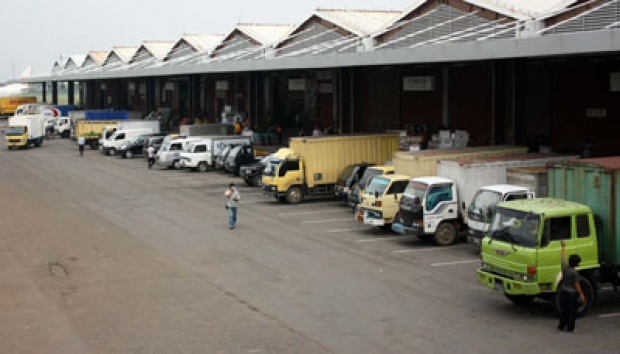
Volcanic Ash from Anak Krakatau Grounds Seven Airports and Threatens Indonesia’s Trade Arteries
Tempatdonasi.com – SCI – The skies above western Java and Lampung have turned cautious as drifting ash from Mount Anak Krakatau’s continued eruption forces operational closures across seven Indonesian airports. Through Monday evening, September 7, 2026, at 11:59 p.m. WIB, the Transportation Ministry confirmed that all seven facilities remain shut to commercial traffic. The grounded list spans Soekarno-Hatta International Airport in Banten, Budiarto Airport also in Banten, Halim Perdanakusuma Airport in Jakarta, Pondok Cabe Airport in Banten, Radin Inten II Airport and Muhammad Taufiq Kiemas Airport in Lampung, and Husein Sastranegara Airport in West Java.
The scale of disruption is substantial. Transportation Minister Dudy Purwagandhi disclosed that 2,961 flights have been affected by schedule adjustments tied to the ash plume. Of those, 2,339 were domestic routes and 622 were international. Passenger disruptions reached approximately 341,000 travelers, encompassing cancellations, delays, and reroutings.
“These impacts include flight cancellations, delays, and reroutings,” Dudy said in a written statement on Monday, September 7, 2026.
Despite paper-based ash tests returning negative results at several of the affected airports, full resumption of flight operations remains conditional on formal clearance from the Volcanic Ash Advisory Center (VAAC) headquartered in Darwin, Australia. Dudy noted that the extended closure window gives airport operators and airlines additional preparation time to ensure safe restart of service.
Economic Exposure Through Indonesia’s Primary Air Cargo Gateway
Beyond passenger inconvenience, the closures strike at the commercial nervous system of Indonesian trade. Soekarno-Hatta Airport functions as the principal aerial conduit for high-value, time-sensitive merchandise moving in and out of the country. Supply Chain Indonesia (SCI), a national logistics advisory body, has pressed the government to implement cross-agency disaster logistics protocols so that airport halts do not cascade into broader industrial and supply chain bottlenecks.
SCI chief executive Setijadi laid out the financial stakes in a written statement issued Monday, September 7, 2026. Non-oil and gas exports routed through Soekarno-Hatta totaled US$20.77 billion in 2025. The indicative gross trade flow passing through the airport each day stood at US$84.03 million. Import volume, drawn from Statistics Indonesia (BPS) and the Ministry of Trade’s Trade Single Data, reached 174,900 tons annually — roughly 479 tons per day.
“As a result, production and trade activities are affected, especially for networks connected to Soekarno–Hatta Airport, which serves as the main gateway for delivering high-value and time-sensitive goods,” Setijadi said.
Setijadi’s modeling suggests that an eight-hour disruption to flight operations could delay import-export flows through the airport by approximately US$28 million. That figure breaks down into US$9.04 million in export value and US$18.97 million in import value, encompassing nearly 160 million tons of goods in transit.
“These calculations only cover international trade through Soekarno-Hatta, excluding domestic deliveries, and are not direct loss estimates,” Setijadi clarified.
Recommendations for Resilience and Continuity
SCI’s guidance extends beyond immediate crisis management. Setijadi urged businesses to build continuity plans calibrated to varying durations of operational disruption. Key elements include identifying alternative airports and transit modes, and locking in standby capacity agreements with logistics providers before disruptions occur rather than scrambling during them.
“Importers must adjust safety stock levels for critical raw materials, while exporters should secure alternative warehousing and cold chain facilities,” he said.
For manufacturers dependent on just-in-time inbound shipments of components or raw inputs, even a single day of airport closure can idle production lines. For exporters of perishables, pharmaceuticals, and electronics, the absence of cold-chain or bonded-warehouse alternatives at secondary airports compounds the risk. The recommendation to pre-negotiate standby capacity with carriers is therefore aimed at converting a reactive scramble into a managed transition.
Background: Anak Krakatau and Regional Airspace
Anak Krakatau, the youngest member of the Krakatau volcanic group situated in the Sunda Strait between Java and Sumatra, has a history of explosive eruptions that send ash columns into commercial flight corridors. The strait’s position makes it a natural chokepoint for air traffic between the Indonesian archipelago’s western islands and mainland Southeast Asia. When ash plumes drift eastward or northeastward, they intersect the approach and departure paths of Jakarta’s two principal airports, as well as secondary fields in Banten, Lampung, and West Java.
The government has separately waived overstay fees for foreign nationals stranded by the eruption, acknowledging that travelers caught in multi-day airport closures face visa complications beyond their control. The broader implication for Indonesia’s position as a regional logistics hub — one that channels tens of billions of dollars in annual air cargo — is that volcanic events of this magnitude expose structural vulnerabilities in single-gateway dependency. Diversifying air cargo capacity across secondary airports, strengthening inter-agency coordination between aviation, trade, and disaster-management bodies, and maintaining pre-positioned contingency warehousing are the structural responses that SCI and industry stakeholders are now pressing for.
Related Reading
Frequently Asked Questions
What is SCI?
SCI is the main topic of this guide. The article explains the context, practical details, and next steps readers should understand.
Why does SCI matter?
SCI matters because readers are looking for a useful answer, not just a short summary. Good content should match search intent and help them decide what to do next.