
Singapore Air Quality Worsens as Haze From Indonesia Hits All Five Regions
Smoke haze linked to forest fires in Indonesia drove air pollution readings into the unhealthy category across Singapore on Monday morning, September 15
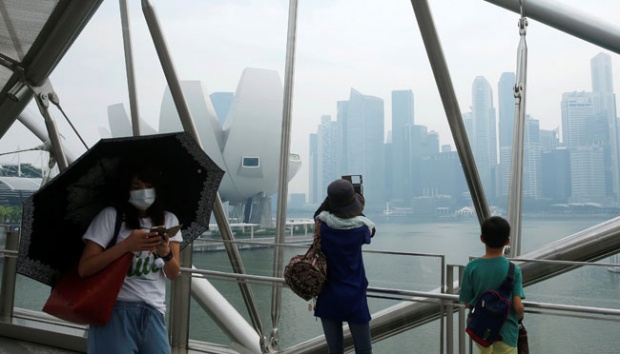
Haze Pushes Singapore Air Quality Into Unhealthy Range Across the Island
Tempatdonasi.com – Smoke haze linked to forest fires in Indonesia drove air pollution readings into the unhealthy category across Singapore on Monday morning, September 15, affecting all five regions of the city-state.
The highest 24-hour Pollutant Standards Index, or PSI, was recorded in the central region, where the reading reached 154 at 6 a.m. The north registered 104, the south 111, while both the east and west recorded 128.
Conditions improved modestly later in the morning, but air quality remained unhealthy throughout Singapore. At 9 a.m., PSI readings stood at 103 in the north, 106 in the south, 122 in the east, 124 in the west and 148 in the central area.
What the PSI readings mean
Singapore’s National Environment Agency classifies a 24-hour PSI result from 101 to 200 as unhealthy. Residents are advised to cut back on prolonged or strenuous outdoor activity when pollution reaches this range, particularly if they are sensitive to haze.
A PSI of 51 to 100 falls within the moderate band, while readings of zero to 50 are considered good. The spread of unhealthy readings across every region marked a further deterioration after several days in which conditions had generally been moderate.
On September 14, all regions except the north had already moved into the unhealthy range. The northern area crossed the 101 mark at about 1 a.m. on September 15, rising from 99 at midnight to 102.
The islandwide episode highlights how haze conditions can vary by location even within a compact urban area. Wind direction, the movement of smoke plumes and changing local conditions can produce notably different readings between regions, with central Singapore experiencing the most severe PSI level during the early morning period.
Fine-particle pollution eases in most areas
One-hour PM2.5 readings had largely returned to normal levels by 6 a.m. PM2.5 refers to very small airborne particles that can be inhaled deeply into the respiratory system, making it an important measure during haze events.
Most parts of Singapore recorded one-hour PM2.5 concentrations between 32 and 44 micrograms per cubic meter. The central and western regions remained above the normal range, however, at 66 and 59 micrograms per cubic meter respectively.
Singapore treats PM2.5 concentrations up to 55 micrograms per cubic meter as normal. Readings from 56 to 150 are elevated, while levels between 151 and 250 are classified as high.
For residents, the difference between the PSI and one-hour PM2.5 figures is useful context. PSI reflects pollution over a longer 24-hour period, so it can remain unhealthy even after shorter-term particle readings begin to decline. A temporary improvement in PM2.5 therefore does not necessarily mean the broader haze episode has ended.
Fires in Indonesia continue to influence conditions
Moderate to dense smoke plumes from forest fires in Kalimantan continued to be visible, with some of the smoke moving in Singapore’s direction. Smoke was also detected over southern Sumatra.
Dry weather is expected to continue over Singapore and nearby parts of the region in the coming days. Winds are forecast to blow from the southeast to east-southeast, a pattern that could keep haze affecting the city-state.
Environmental authorities had forecast air quality ranging from high-moderate to mid-unhealthy over the following 24 hours in an advisory issued on September 14. The forecast reflected concern that the regional weather pattern could continue carrying smoke across borders.
The latest decline follows an earlier unhealthy PSI reading on September 4, when central Singapore reached 101. Since that time, unhealthy levels have periodically appeared in the central, eastern and western parts of the island.
First unhealthy haze episode since October 2023
This is the first occasion since October 2023 that haze has lifted Singapore’s PSI into the unhealthy category. Authorities had previously identified a greater risk of haze between June and October because warmer and drier conditions associated with El Nino and the Indian Ocean Dipole can increase the likelihood of fire and smoke movement in the region.
Haze is a regional issue: smoke produced by land and forest fires can travel long distances when atmospheric conditions and winds align. Singapore’s experience during this episode demonstrates why residents are encouraged to monitor local pollution updates rather than relying only on visibility or conditions in a single neighbourhood.
People planning outdoor exercise, work or recreational activities may wish to take the PSI level into account, especially when readings are unhealthy. Reducing outdoor exertion can limit exposure during periods of poorer air quality. Conditions can also change over the course of a day as winds shift and smoke concentrations rise or fall.
With dry conditions expected to persist and smoke plumes still present over parts of Indonesia, Singapore faces the prospect of continued haze exposure in the near term. The pattern of readings across September 14 and 15 shows that even when pollution eases slightly, air quality may remain at levels requiring caution.
Related Reading
Frequently Asked Questions
What is Singapore Air Quality Worsens as Haze?
Singapore Air Quality Worsens as Haze is the main topic of this guide. The article explains the context, practical details, and next steps readers should understand.
Why does Singapore Air Quality Worsens as Haze matter?
Singapore Air Quality Worsens as Haze matters because readers are looking for a useful answer, not just a short summary. Good content should match search intent and help them decide what to do next.