Singapore’s Air Quality Deteriorates Across All Regions
Singapore woke up to unhealthy air quality in every region on Tuesday, September 29, as smoke haze linked to fires in southern Sumatra and Kalimantan moved
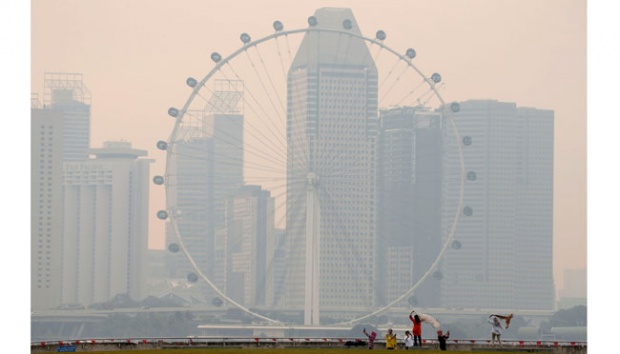
Haze Pushes Singapore Air Quality Into Unhealthy Range Across the Island
Tempatdonasi.com – Singapore woke up to unhealthy air quality in every region on Tuesday, September 29, as smoke haze linked to fires in southern Sumatra and Kalimantan moved over the city-state. The deterioration marked a broad islandwide impact, with the 24-hour Pollutant Standards Index, or PSI, exceeding the unhealthy threshold in the north, south, east, west and central areas.
At 7 a.m., the northern region registered a 24-hour PSI of 101, placing it just inside the unhealthy category. Conditions were more severe in the central region, where the index reached 155, the highest reading among Singapore’s five regions at that time.
The worsening pattern had begun the previous evening. At 8 p.m. on Monday, the central and southern regions moved into the unhealthy band with readings of 104 and 103. The west followed an hour later at 101, while the east crossed the threshold around midnight. The most recent occasion when all five regions experienced unhealthy air quality was September 15.
Smoke haze drifts from regional fires
Singapore’s National Environment Agency said the haze was being driven by moderate to dense smoke from fires in Indonesia’s southern Sumatra and Kalimantan. Weather conditions allowed the smoke to drift toward Singapore, affecting air quality over a wide area rather than remaining concentrated in one part of the island.
While showers were expected on Tuesday, rainfall alone was not expected to remove the risk of haze completely. Prevailing winds were forecast to blow from the east or southeast, leaving open the possibility that smoke-laden air could continue to affect Singapore.
The agency projected that the 24-hour PSI could remain between the upper end of the moderate range and the middle of the unhealthy range during the following 24 hours. Such forecasts can shift with changes in rainfall, wind direction, wind strength and the amount of smoke produced by fires in the surrounding region.
What the PSI readings mean
The 24-hour PSI is Singapore’s main daily measure of air quality and is used to guide public health advice. It reflects average conditions over the preceding 24 hours rather than a single moment in time. The index takes into account six pollutants: PM2.5, PM10, ozone, sulphur dioxide, nitrogen dioxide and carbon monoxide.
A PSI reading from 101 to 200 is classified as unhealthy. Readings from 201 to 300 fall into the very unhealthy category, while levels above 300 are considered hazardous. The central region’s reading of 155 remained below the very unhealthy threshold, but it indicated a significant decline from normal or moderate conditions.
Residents also faced elevated hourly PM2.5 levels. By 9 a.m., measurements across all five regions ranged from 61 to 112. Hourly PM2.5 readings between 56 and 150 are considered elevated; the high category begins at 151 and runs to 250, while values above 250 are classified as very high.
Why PM2.5 matters during haze episodes
PM2.5 refers to very small airborne particles measuring 2.5 micrometres or less in diameter. These particles are a major pollutant during haze events because smoke can carry them across long distances. Their small size means they can be inhaled deeply into the respiratory system, and elevated exposure may create health risks.
The distinction between the PSI and hourly PM2.5 readings is useful for people monitoring conditions during a haze episode. The PSI provides a broader view of average air quality over the last day, while hourly PM2.5 figures give a more immediate indication of fine-particle concentrations. Both measurements help show whether haze conditions are persisting, improving or worsening.
Air quality can vary between regions even when haze affects the whole island. Local weather conditions, shifting winds and rainfall may influence how smoke is distributed. For that reason, a region-specific reading can be more useful than an islandwide impression when people are considering outdoor plans.
Periods of unhealthy air quality can be particularly relevant for people who are more sensitive to pollution, including those with existing respiratory or heart conditions. Fine-particle haze may also be a concern for children and older adults. Monitoring official air-quality updates can help residents make informed decisions as conditions change.
The islandwide unhealthy readings underscored how quickly transboundary haze can affect Singapore when smoke from regional fires is carried by prevailing winds. With weather conditions still capable of bringing haze toward the city-state, the next day’s air quality depended heavily on the movement of smoke and the development of local rain and wind patterns.
Related Reading
Frequently Asked Questions
What is Singapore s Air Quality Deteriorates Across?
Singapore s Air Quality Deteriorates Across is the main topic of this guide. The article explains the context, practical details, and next steps readers should understand.
Why does Singapore s Air Quality Deteriorates Across matter?
Singapore s Air Quality Deteriorates Across matters because readers are looking for a useful answer, not just a short summary. Good content should match search intent and help them decide what to do next.