Spain: Tens of Thousands Rally over Ceuta Crisis
Spain - What was meant to be a day of civic celebration in Ceuta, Spain's small North African exclave, instead became a flashpoint for national fury. On
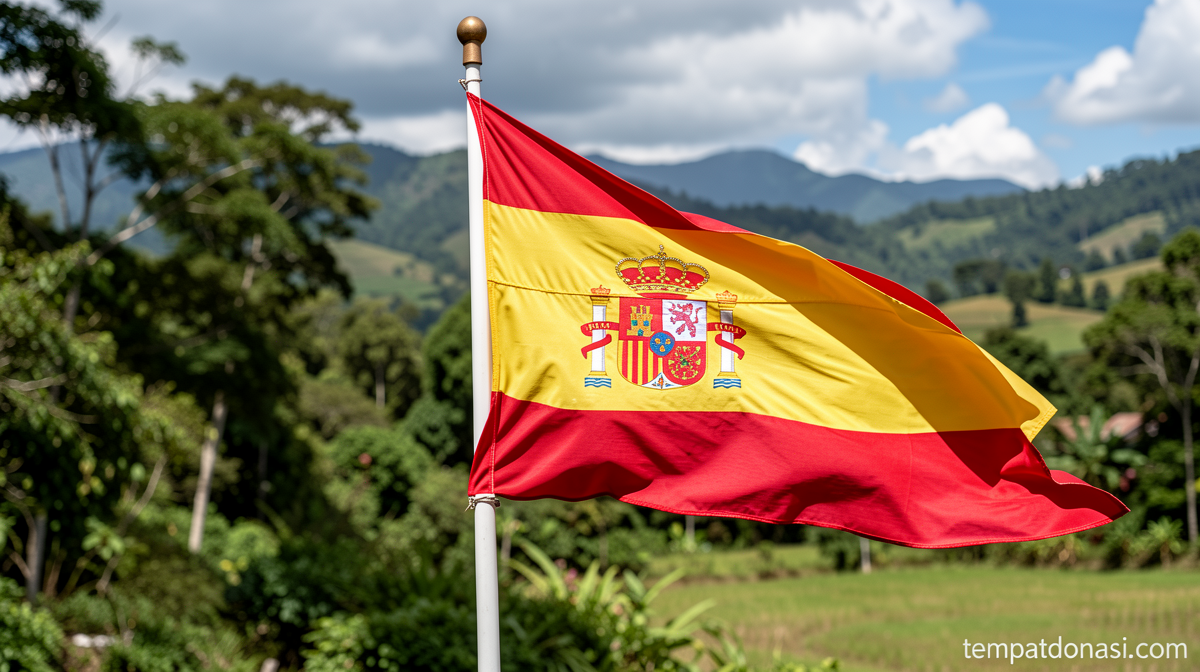
Spain’s Ceuta Border Crisis Sparks Nationwide Outrage and Political Confrontation
Tempatdonasi.com – Spain – What was meant to be a day of civic celebration in Ceuta, Spain’s small North African exclave, instead became a flashpoint for national fury. On Wednesday, tens of thousands of Spaniards poured into streets across the country to demand answers from Prime Minister Pedro Sanchez’s left-wing government over the chaotic border situation that has gripped the territory since late July. The demonstrations landed squarely on Ceuta’s annual official holiday — a date traditionally reserved for local festivities — but this year the backdrop was one of disorder, displaced migrants, and institutional strain rather than confetti and parades.
A Nationwide Mobilization
The largest single gathering drew an estimated 50,000 participants into Madrid, where the Spanish Federation of Municipalities and Provinces, a nonpartisan body representing local governments, officially coordinated the march. Similar crowds assembled in Barcelona, Valencia, and Seville, where demonstrators waved Spanish flags and chanted demands for decisive government action. In total, more than 200 cities and towns hosted organized rallies, making the day one of the broadest civic mobilizations in recent Spanish political memory.
The scale of the turnout was not lost on the government. Angel Victor Torres, Spain’s territorial policy minister, appeared on Spanish National Radio and characterized the marches as exercises in partisan politics rather than genuine solidarity with Ceuta’s residents.
“This is not to show support for the city of Ceuta or its residents; it is to attack the government of Spain,” Torres said.
His framing drew sharp pushback from opposition benches. Conservative and far-right parties seized the moment to accuse Sanchez’s administration of pursuing a policy of appeasement toward Morocco, arguing that the government had failed to project sufficient authority at the frontier. The rallies thus became a stage for a broader electoral-season argument about who bears responsibility for what happened at the border.
Aftermath of the Madrid March
The demonstration’s conclusion did not pass quietly. Witnesses described hearing shots and explosions as crowds lingered near the route’s end. Spanish newspaper El Pais detailed that police deployed rubber bullets and tear gas to clear remaining groups from the streets. The use of force added a new layer of tension to an already volatile day and fueled further criticism of the interior ministry’s crowd-management choices.
In several cities, counter-demonstrations took place, with participants voicing opposition to what they described as rising racism in public discourse around migration. These smaller gatherings underscored how the Ceuta episode has fractured public opinion along multiple fault lines — not only left versus right, but also nativist sentiment versus cosmopolitan solidarity.
The Human Toll Inside Ceuta
While politicians debated in Madrid, life in Ceuta itself remained far from normalized. A month after the initial surge of crossings, thousands of migrants — including unaccompanied minors — continued to sleep on beaches and public squares while authorities worked through the logistical task of sheltering, registering, and repatriating those eligible to return to Morocco. Roughly 5,000 to 8,000 migrants were still present in the territory at the time of the protests.
“We’re suffering and we want to get to Europe or find a solution right now,” Moroccan migrant Nebil Tazi told The Associated Press. “We’ve been waiting for a month, but there isn’t one.”
Tazi’s words captured the exhaustion of people caught in administrative limbo. Ceuta, a territory of just over 18 square kilometers sharing a land border with Morocco, was never designed to absorb sudden inflows of several thousand people. Its housing stock, social services, and transit infrastructure operate at capacity on a normal day; a surge of that magnitude strains every system simultaneously.
Government Response and the Question of the Border
Sanchez addressed the crisis in a recorded video message released Wednesday, asserting that his administration was deploying all available resources to restore tranquility for Ceuta’s residents. Earlier that week, the government announced a €309 million ($357 million) package earmarked for the city’s social services, migrant housing, and security infrastructure — a figure intended to signal that Madrid had not abandoned the exclave, a charge the government has repeatedly rejected.
Yet local leadership in Ceuta pressed for a harder line. Juan Jesus Vivas, the territory’s top official, called on the central government to physically reinforce the border with Morocco rather than relying on bilateral cooperation with its neighbor.
“If we don’t do this, there will always be someone tempted to use migration as a tool for political ends,” Vivas said.
His remark pointed to a recurring pattern in Morocco-Spain relations: periodic, large-scale crossings that appear timed to exert diplomatic pressure. Whether the late-July surge was orchestrated, spontaneous, or somewhere in between remains contested, but the episode has reignited a wider debate across the European Union about migration management, external-border integrity, and the obligations of member states that share land frontiers with non-EU territories.
Why Ceuta Matters
Ceuta, along with its sister enclave Melilla, represents Spain’s last territorial foothold in Africa — a legacy of centuries of Iberian expansion. Their status as Spanish sovereign territory within the EU’s external border makes them uniquely exposed: any pressure at the frontier is simultaneously a domestic governance test, a bilateral diplomatic issue with Morocco, and a chapter in the continent-wide migration conversation. The Wednesday rallies, the police response, the opposition’s accusations, and the migrants still waiting on Ceuta’s beaches together illustrate how a single border event can cascade into a full-spectrum political crisis within days.
Related Reading
Frequently Asked Questions
What is Spain?
Spain is the main topic of this guide. The article explains the context, practical details, and next steps readers should understand.
Why does Spain matter?
Spain matters because readers are looking for a useful answer, not just a short summary. Good content should match search intent and help them decide what to do next.