
Survey Finds 61.6% of Indonesians Support Continuing MBG Program
A nationwide survey has found substantial backing for the continuation of Indonesia’s Free Nutritious Meal, or MBG, program, with 61.6 percent of respondents
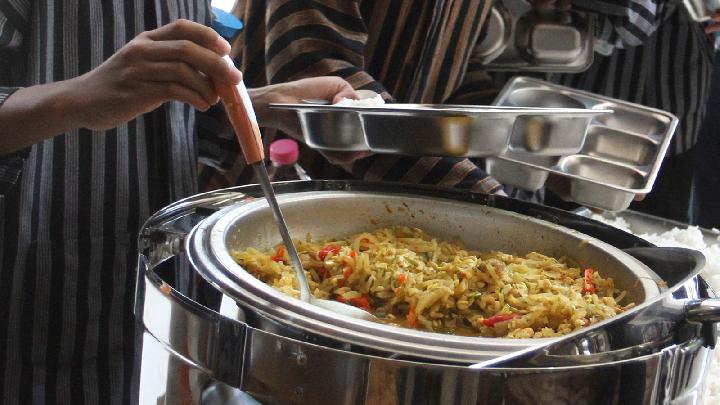
Public Support Remains Strong for Indonesia’s Free Nutritious Meal Program
Tempatdonasi.com – A nationwide survey has found substantial backing for the continuation of Indonesia’s Free Nutritious Meal, or MBG, program, with 61.6 percent of respondents saying the initiative should proceed. The findings also show that 66.5 percent see clear benefits from the government’s flagship nutrition program.
The survey was conducted face to face by the Adidaya Institute from September 15 to 21, 2026. It included 1,240 respondents across all 38 provinces, carrying a 2.78 percent margin of error at a 95 percent confidence level.
Public awareness of MBG was particularly high, reaching 93.4 percent. This made it the best-known flagship initiative associated with President Prabowo in the survey.
“This refutes the negative narrative suggesting that the public does not want the MBG program. Approximately six out of ten citizens want the MBG program to continue, and two out of three feel the program is beneficial,” Rahman Toha Budiarto said.
Perceived Nutrition and Family Benefits
Rahman, the Adidaya Institute’s executive director, said the data reflected broad recognition of the program’s intended purpose. Almost seven in 10 respondents, or 69.9 percent, said they approved of MBG. Meanwhile, 58.2 percent felt the initiative matched community needs.
The responses also pointed to a direct household impact. About 63 percent said MBG had affected their families, while 63.4 percent believed it had helped improve nutrition. These findings suggest that many respondents connect the meal program not only with food distribution, but also with wider health and nutritional goals.
“This means the majority of the public views the MBG program as meeting public needs and having a positive impact on health and nutritional improvement. Naturally, this implies that the public understands the objectives of the MBG program,” Rahman stated.
Access to the program has reached several groups. The survey indicated that 73.8 percent of students had received MBG meals. It also found that 33.4 percent of toddlers and 25.5 percent of pregnant women had benefited.
Respondents generally gave favorable assessments of the meals themselves. A total of 54.6 percent considered the MBG menu more nutritious than food prepared at home. More than half also viewed its quality as significantly better than home-cooked meals.
“The MBG menu is rated as more nutritious, more varied, and of higher quality than home-cooked meals,” Rahman said.
Local Suppliers and MSME Participation
The survey also highlighted expectations that MBG should create economic opportunities close to the communities it serves. A large majority, 78.8 percent, wanted local businesses and micro, small, and medium enterprises, or MSMEs, to participate in supplying the program.
Adidaya Institute economist Bramastyo Prastowo said respondents favored food ingredients sourced from local farmers, fishers, livestock breeders, and MSMEs. That preference places emphasis on an MBG supply chain that can support food producers as well as meal recipients.
About 40,000 MSMEs have already become food-ingredient suppliers for the program. On average, three MSMEs have been recorded as suppliers for every Nutrition Fulfillment Service Unit, known as SPPG, in regencies and cities around Indonesia.
The scale of procurement has made MBG a meaningful component of government consumption. Goods procurement connected to the program has been valued at Rp54.4 trillion, and Bram said it was the fastest-growing component during the first quarter of 2026.
“In factual terms, the MBG program is currently driving government consumption through goods procurement valued at Rp54.4 trillion. The MBG program is even the fastest-growing component in the first quarter of 2026,” Bram revealed.
Its economic effect is also visible in employment around the program’s kitchens. Government statistics cited in the survey show that MBG has created around 987,000 direct jobs in SPPG kitchens. Nearly all of those workers, 99 percent, live near the relevant SPPG locations.
Local purchasing and nearby employment help explain why supplier participation is central to public expectations. In practice, sourcing ingredients from businesses near SPPG kitchens can link nutrition delivery with work opportunities for surrounding residents.
Confidence in the National Nutrition Agency
The survey also measured views of the National Nutrition Agency, or BGN, which manages the MBG program. Fifty-five percent of respondents said they were satisfied with the agency’s performance, while 52.9 percent said they had confidence in its capacity to operate the program effectively.
Satisfaction with MBG implementation rose by three percentage points after the agency’s leadership change. Fadhli, the Adidaya Institute’s Director of Politics and Democracy, said the results showed that public confidence remained above the halfway mark.
“More than half of the public is satisfied with the BGN’s performance. They also believe the agency is capable of successfully implementing the MBG program,” Fadhli stated.
The figures illustrate both the broad reach of MBG and the challenge of maintaining public trust as the program continues. Its long-term standing will depend not only on awareness and approval, but also on consistent food quality, access for intended beneficiaries, reliable local supply networks, and effective administration by BGN.
Related Reading
Frequently Asked Questions
What is Survey Finds 61 6 of Indonesians?
Survey Finds 61 6 of Indonesians is the main topic of this guide. The article explains the context, practical details, and next steps readers should understand.
Why does Survey Finds 61 6 of Indonesians matter?
Survey Finds 61 6 of Indonesians matters because readers are looking for a useful answer, not just a short summary. Good content should match search intent and help them decide what to do next.