US, Australia to Boost Defense Ties Amid China’s Influence
The Indo-Pacific's strategic calculus shifted again this week when the United States and Australia unveiled a broadened framework for military cooperation
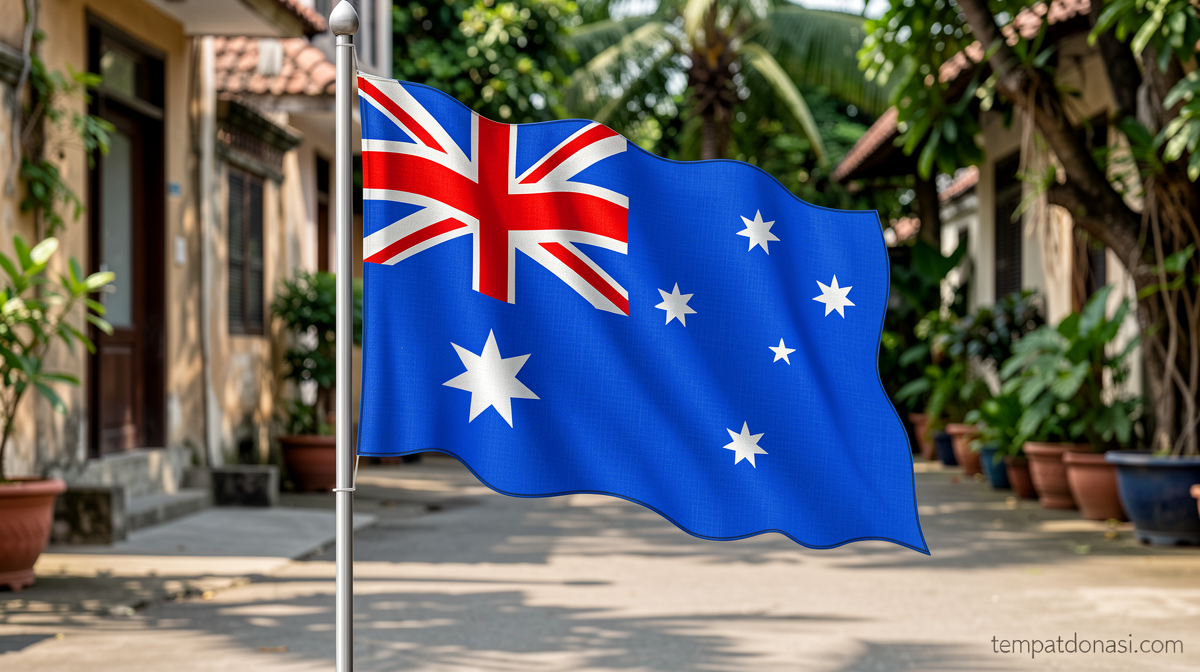
Washington and Canberra Tighten Pacific Defense Architecture as Beijing Expands Its Naval Footprint
Tempatdonasi.com – The Indo-Pacific’s strategic calculus shifted again this week when the United States and Australia unveiled a broadened framework for military cooperation, explicitly framed as a counterweight to China’s accelerating presence across the region’s island chains, shipping lanes, and littoral waters. The announcement followed a Wednesday meeting in Washington between U.S. Defense Secretary Pete Hegseth and Australian Deputy Prime Minister and Defence Minister Richard Marles, a conversation that both sides described as producing concrete operational commitments rather than mere diplomatic language.
What the Two Capitals Committed to
The Pentagon outlined three pillars of the new arrangement. First, both governments will accelerate what are called “force posture initiatives” at Australian installations — essentially standing agreements that permit American service members to train on Australian soil, pre-position equipment, rotate aircraft through local airfields, and receive logistics support for U.S. Navy vessels transiting the region. Second, the two militaries will deepen combined-logistics cooperation, meaning shared fuel depots, joint maintenance pipelines, and integrated supply chains that reduce the friction of operating across thousands of nautical miles. Third, they will expand joint exercises designed to build greater interoperability between American and Australian units at the tactical level.
These commitments sit within a long-standing constraint: Australia does not allow permanent foreign military bases on its territory. What it does permit — and has done for decades — is the rotational presence of U.S. Marine units in Darwin, the northern port city that has become a staging point for Pacific operations since 2011, alongside a calendar of large-scale joint drills. Whether the latest agreement will translate into a larger or more sustained American troop footprint on Australian soil remained unspecified at the time of the announcement.
Marles Frames the Threat in Unambiguous Terms
Speaking to reporters after the meeting, Marles left little doubt about who the expanded cooperation is aimed at. He characterized the Chinese military modernization program as
“the biggest conventional military build-up by any country in the world since the Second World War in the form of China.”
He added that the growing American military presence on Australian soil was a deliberate, proportional response to that trajectory.
“American force posture in Australia is growing,”
he told the press corps, before framing the broader objective in terms of regional equilibrium rather than confrontation:
“We need to be ensuring that we build deterrence, that we build balance, so that we can provide for the peace and stability of the region in which we live.”
Hegseth, for his part, said Canberra understood
“the gravity of maintaining a favorable balance of power in the region.”
Shared Weapons and Next-Generation Capabilities
Beyond posture and logistics, the Pentagon confirmed that the two sides discussed progress toward shared capacity in guided munitions and next-generation systems — language that points to joint procurement, co-development, or at minimum compatible sensor-and-fire-control architectures. Hegseth described the strategic alignment between the two nations’ defense white papers as
“strong alignment”
and urged allied governments to invest in their own sovereign security while ensuring that
“both plan together but also ensure our capabilities match and are complementary.”
That emphasis on complementarity reflects a long-running Australian policy debate: how much to rely on American power projection versus how much to build indigenous strike and surveillance capability. Canberra has in recent years accelerated its own missile-strike program, expanded its submarine fleet through the AUKUS arrangement, and deepened ties with Pacific Island nations — all moves aimed at reducing sole dependence on a single patron.
The AUKUS Dimension and China’s Reaction
The broader architecture within which this latest step sits is the AUKUS trilateral pact, signed in 2021 with Britain as the third partner. Under that agreement, American defense personnel are already embedded at HMAS Stirling, the Royal Australian Navy’s submarine base on Western Australia’s coast. From 2027, the base is slated to host a rotating complement of U.S.-commanded nuclear submarines, giving the Pacific a permanent American undersea presence that did not exist before the pact.
Beijing has repeatedly labeled AUKUS a destabilizing factor, warning that it could trigger a regional arms race and erode the post-war order in the Asia-Pacific. Those warnings have not slowed the implementation timetable, but they do shape the rhetorical environment in which every new bilateral military step between Washington and Canberra is received.
Why It Matters for the Wider Region
For the Pacific Island nations that sit between the two great powers, the deepening U.S.-Australian military architecture carries both reassurance and anxiety. It signals that Canberra and Washington intend to contest any attempt to redraw the region’s security map unilaterally. At the same time, the visible buildup of forces, sensors, and logistics infrastructure in the Pacific raises questions about escalation dynamics, freedom-of-navigation norms, and the long-term sustainability of a deterrence posture that depends on the continued political will of two democracies separated by roughly 10,000 kilometers of ocean. The Wednesday meeting in Washington was, in practical terms, a step toward answering those questions with operational reality rather than strategic ambiguity.
Related Reading
Frequently Asked Questions
What is US Australia to Boost Defense Ties?
US Australia to Boost Defense Ties is the main topic of this guide. The article explains the context, practical details, and next steps readers should understand.
Why does US Australia to Boost Defense Ties matter?
US Australia to Boost Defense Ties matters because readers are looking for a useful answer, not just a short summary. Good content should match search intent and help them decide what to do next.