Was Krakatau’s 1883 Eruption the Loudest Sound in the History?
On a single August evening in 1883, a volcanic island in the Sunda Strait between Java and Sumatra unleashed a sequence of explosions so violent that the
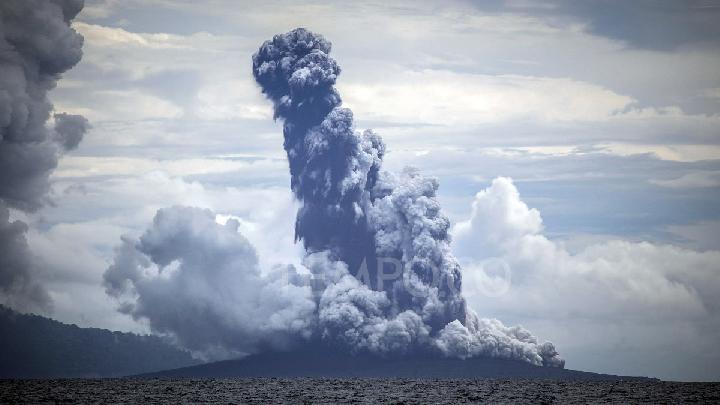
The Day the Earth Shook: Revisiting Krakatau’s 1883 Catastrophe
Tempatdonasi.com – On a single August evening in 1883, a volcanic island in the Sunda Strait between Java and Sumatra unleashed a sequence of explosions so violent that the resulting pressure disturbances were detected by barometric instruments on every inhabited continent. Krakatau’s final, most destructive phase struck on August 27, 1883, tearing apart much of the island’s structure and sending shockwaves rippling through the atmosphere for days afterward. The event stands as one of the deadliest volcanic disasters in recorded history, killing at least 36,417 people and reshaping the geography of the Indonesian archipelago.
A Sound Beyond Human Experience
The most powerful blast of that evening has been estimated at approximately 310 decibels, a figure that places it far outside the range of any sound a human being encounters in daily life. To grasp the scale, consider that ordinary conversation registers around 60 dB, a full-throttle rock concert can push past 100 dB, and sustained exposure above roughly 120 dB begins to cause pain and potential hearing damage. Krakatau’s peak output exceeded the pain threshold by nearly two hundred decibels — a gap so vast that the logarithmic nature of the decibel scale makes simple comparison almost meaningless.
At that magnitude, the phenomenon is less an “extremely loud noise” than a colossal pressure disturbance generated by the sudden release of enormous thermal and kinetic energy. The atmosphere itself became the transmission medium, carrying the disturbance across oceans and continents in ways that ordinary acoustic propagation cannot explain.
How Far Did the Blast Reach?
Historical accounts place audible reports of the explosions in Perth, Western Australia, roughly 3,110 kilometers (1,930 miles) from the volcano, and on the island of Rodrigues near Mauritius, approximately 4,800 kilometers (3,000 miles) distant. Those figures describe what human ears could detect. The atmospheric pressure wave traveled considerably farther, completing more than three full circuits of the globe before dissipating, with barometric stations in widely separated locations logging the disturbance.
One counterintuitive detail emerged from the aftermath: the blasts were not necessarily heard most clearly in the immediate vicinity of the volcano. Researchers have suggested that a significant fraction of the acoustic energy was channeled upward into the upper atmosphere, where it propagated efficiently over vast distances while producing comparatively muted ground-level sound near the source. The result was a paradox — the loudest audible effects registered thousands of kilometers away rather than in the shadow of the erupting cone.
Tsunamis, Pyroclastic Flows, and the Death Toll
Sound was only one facet of the catastrophe. The explosions generated a train of tsunamis that battered every coastline around the Sunda Strait. In several locations, wave heights exceeded 30 meters (100 feet), sweeping through fishing villages and coastal settlements on both Java and Sumatra with little warning. Pyroclastic flows and surges — superheated mixtures of gas, ash, and rock fragments — also devastated areas flanking the strait, compounding the toll of the waves.
The total energy released by the explosions has been estimated at around 200 megatons of TNT equivalent, roughly four times the yield of the Tsar Bomba, the most powerful nuclear weapon ever detonated. That comparison, drawn from a century later, underscores just how extraordinary the volcanic event was in purely energetic terms.
Scientists note that the explosions and the largest tsunamis, though occurring within the same catastrophic episode, were driven by distinct physical processes. The blasts are linked to the rapid release of gas-rich magma from the volcanic conduit, while the most destructive waves likely followed the gravitational collapse of volcanic debris into the surrounding sea. Two mechanisms, one evening, one catastrophe.
Anatomy of the Disaster
The Sunda Strait, a narrow waterway separating two of Indonesia’s largest islands, had long been a zone of intense tectonic and volcanic activity. Krakatau sat atop a submarine volcanic system whose prior eruptions had already built the island’s structure over centuries. By 1883, pressure within the conduit had reached a critical threshold. When the final sequence of explosions began that August evening, the upper portion of the island was effectively removed, leaving a caldera partially filled with seawater.
For the communities of Java and Sumatra living along the strait’s shores, the warning signs — tremors, unusual gas emissions, minor precursor eruptions — had been present for weeks. Yet the scale of what followed exceeded any expectation. The combination of near-instantaneous explosions, multi-directional tsunami propagation, and pyroclastic surges left residents with seconds, not minutes, to react.
The Child That Remains
The volcanic system did not fall silent after 1883. In the decades that followed, magma continued to accumulate beneath the caldera floor, eventually building a new cone from the seabed. That cone, now called Anak Krakatau — “Child of Krakatau” — has been monitored continuously by Indonesian and international volcanologists. Its periodic eruptions serve as a reminder that the geological processes responsible for the 1883 disaster remain active beneath the strait.
More than a century and a half later, the Krakatau eruption remains a benchmark event in volcanology, atmospheric physics, and disaster studies. Its combination of record-breaking explosions, globally propagating pressure waves, and lethal tsunamis demonstrates how a single volcanic episode can project its effects thousands of kilometers beyond the source, touching every corner of the planet within hours. The lesson it carries is not merely historical: it is a standing reminder of the scale at which the Earth’s interior can speak, and of how small human settlements are when that voice reaches across an ocean.
Related Reading
Frequently Asked Questions
What is Was Krakatau s 1883 Eruption the Loudest?
Was Krakatau s 1883 Eruption the Loudest is the main topic of this guide. The article explains the context, practical details, and next steps readers should understand.
Why does Was Krakatau s 1883 Eruption the Loudest matter?
Was Krakatau s 1883 Eruption the Loudest matters because readers are looking for a useful answer, not just a short summary. Good content should match search intent and help them decide what to do next.