Why Indonesia’s Non-Parliament Parties Reject 5% Election Threshold
Indonesia’s debate over electoral reform is sharpening as political parties without seats in the House of Representatives reject a proposal to lift the
Smaller Parties Push Back Against Proposed 5 Percent Parliamentary Threshold
Tempatdonasi.com – Indonesia’s debate over electoral reform is sharpening as political parties without seats in the House of Representatives reject a proposal to lift the parliamentary threshold from 4 percent to 5 percent. Their central concern is that a higher bar would leave even more voters without representation in parliament.
The proposal is being discussed as part of the General Elections Bill. Parties grouped in the People’s Sovereignty Movement, known as GKSR, argue that any revision must reflect a 2023 Constitutional Court ruling that called for the parliamentary threshold to be reformulated for future elections.
GKSR includes Hanura and other parties that are currently outside parliament. The group says a 5 percent requirement would run against the spirit of the court’s decision, which found the previous 4 percent provision incompatible with popular sovereignty, electoral justice, and constitutional legal certainty.
Concern Over Votes That Do Not Produce Seats
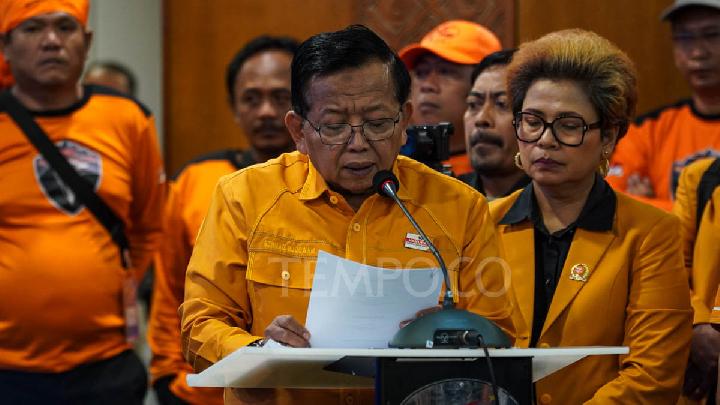
Akhmad of GKSR said lawmakers should approach the election bill with public welfare and national interests in mind, rather than treating the threshold as a matter for coalition parties to settle among themselves. He stressed that the final decision belongs to legislators.
“The ruling must be interpreted wisely and judiciously. It shouldn’t be contradictory,” Akhmad told Tempo on Thursday, September 17, 2026.
For smaller parties, the issue is not only a technical rule for allocating seats. The parliamentary threshold determines whether votes cast for a party can contribute to representation in the national legislature. When a party fails to reach the required nationwide share, its votes do not translate into House seats.
GKSR pointed to the scale of those unconverted votes in the last two elections. Around 13 million votes did not result in seats in the 2019 election under the 4 percent threshold. The figure rose to roughly 17 million in the 2024 election.
With those results in mind, Akhmad maintained that compliance with the Constitutional Court’s direction would require a threshold below 4 percent, not a higher one. A 5 percent standard, he argued, could increase the number of citizens whose choices are absent from parliament.
Three Alternatives Proposed by GKSR
The People’s Sovereignty Movement plans to submit its own draft proposal for the General Election Bill. It has outlined three possible approaches to the parliamentary threshold.
The first option is to eliminate the threshold entirely. The second would calculate eligibility through valid votes received by each party in individual electoral districts rather than relying solely on a nationwide benchmark. The third option is to establish a 1 percent national threshold.
Each alternative is intended to broaden the path for votes to be converted into representation while legislators weigh the balance between a more inclusive parliament and the desire for an effective legislative system.
“We are confident that our advice will be considered by lawmakers in accordance with the Constitutional Court’s order,” said Said Iqbal, Chair of the GKSR and President of the Labor Party, on Friday, September 18, 2026.
The group’s intervention places the threshold question at the center of a wider legislative discussion about the rules that will govern Indonesia’s next election. The court ruling has made the issue more consequential, because lawmakers are expected to craft a revised formula rather than simply retain the prior arrangement unchanged.
Opposition Also Comes From Outside-Parliament Coalition Parties
Resistance to the 5 percent proposal is not limited to the parties in GKSR. The Indonesian Solidarity Party, or PSI, has also objected. PSI supported Prabowo-Gibran in the 2024 election but does not hold parliamentary seats.
Bestari Barus, the PSI leader, questioned what would happen to voter representation if the percentage were raised after millions of votes already failed to produce seats under the existing rule.
“If tens of millions of votes were wasted by just the 4 percent threshold, what will come with a bigger percentage?” PSI boss Bestari Barus said on Thursday, September 17, 2026.
The Gelora Party likewise voiced its opposition. Its member Rofi Munawar said electoral rules should recognize every expression of voter preference, including support for parties that receive a relatively small share of the vote.
“No matter how small the vote, it must still be valued,” he said.
The arguments from these parties underline a recurring tension in electoral design. A higher threshold can reduce the number of parties entering parliament, but it can also exclude more votes from seat allocation. A lower threshold can make representation more accessible to smaller parties, while potentially producing a more diverse legislature.
No Final Decision Yet
House Deputy Speaker Sufmi Dasco Ahmad said the meeting between parliament and coalition parties had only explored preliminary ideas for the General Election Bill. Other political parties are expected to be invited into later discussions.
“No decision has been made on the brainstorming session. The discussion will be lengthy,” he said.
That leaves the proposed 5 percent threshold far from settled. The coming debate will test whether lawmakers choose a higher national barrier, a lower one, a district-based approach, or no threshold at all. For the parties challenging the proposal, the defining measure will be whether the revised system gives more Indonesian voters a meaningful route to representation in parliament.
Related Reading
Frequently Asked Questions
What is Why Indonesia s Non Parliament Parties?
Why Indonesia s Non Parliament Parties is the main topic of this guide. The article explains the context, practical details, and next steps readers should understand.
Why does Why Indonesia s Non Parliament Parties matter?
Why Indonesia s Non Parliament Parties matters because readers are looking for a useful answer, not just a short summary. Good content should match search intent and help them decide what to do next.