
MBG Watch Seals BGN Office, Demanding End to Free Meal Program
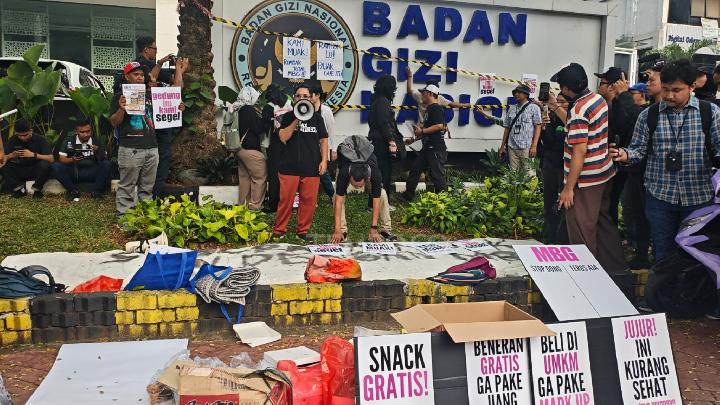
MBG Watch Seals BGN Office Demanding – In a bold protest demonstration, the civil society coalition MBG Watch sealed the National Nutrition Agency (BGN) headquarters in Central Jakarta on June 10, 2026. The action, conducted as a symbolic gesture, was aimed at pressuring the government to address perceived flaws in the Free Nutritious Meal (MBG) initiative. The coalition’s members, including Agus Sarwono, a prominent figure within the group, accused the program of being structured to facilitate rent-seeking practices and mismanagement.
Leadership Accountability Under Scrutiny
During the protest, Sarwono emphasized that the program’s governance model was inherently problematic. He pointed to the arrest of former BGN officials by the Prosecutor’s Office as key evidence of systemic issues. “The former leadership of BGN was recently taken into custody, which highlights the program’s governance flaws,” he stated at the site of the protest.
The coalition has been vocal since October 2025, receiving a steady stream of complaints about the MBG program. These concerns span from subpar food quality to allegations of poisoning among participants. Sarwono’s claims are supported by detailed reports from Transparency International Indonesia, which has documented numerous instances of irregularities. “We’ve gathered substantial feedback from affected communities,” he added, underscoring the program’s growing unpopularity.
Structural Weaknesses Exposed
According to the coalition’s analysis, the MBG program has faced significant challenges since its launch on October 31, 2025. One major issue is the lack of formal regulations, which has allowed the program to operate without clear oversight for 10 months. “This absence of legal framework has created loopholes for corruption,” said Sarwono, who criticized the program’s focus on untargeted beneficiaries.
Another concern raised by the group is the potential for conflicts of interest. They argue that the program’s current structure provides ample opportunities for misuse of public funds. “The governance model is designed to favor certain groups over others,” he explained. “This has led to widespread accusations of favoritism and embezzlement.”
Call for Comprehensive Evaluation
MBG Watch has urged the government to initiate a thorough audit of the program, with the goal of strengthening its administrative framework. “We want to ensure that the program is transparent and benefits those most in need,” said Sarwono. The coalition also emphasized the importance of redirecting resources to vulnerable communities, specifically those at risk of poverty and malnutrition. “The focus should shift to areas where the need is greatest,” he stated.
The group has given the BGN a 30-day deadline to implement reforms. If no progress is made, they warned of a larger demonstration. “We will return with more people if the agency fails to act,” Sarwono said. This ultimatum reflects the coalition’s determination to hold the government accountable for its handling of the program.
Earlier Warnings from Celios
Before the MBG program was officially launched, Celios, the Executive Director of the organization, had already identified critical vulnerabilities. In 2024, Celios outlined four potential corruption points, including issues in food procurement, data manipulation, fund misallocation, and inefficiencies in the supervision process. “We warned the government about these risks months in advance, but they ignored our advice,” said Bhima Yudhistira, a Celios representative.
The coalition’s concerns were not unfounded. Since the program’s inception, the number of complaints has grown, with participants reporting inconsistent meal quality and even cases of food poisoning. These incidents have fueled public distrust and reinforced the idea that the MBG program is more about political gain than nutritional improvement.
Current Leadership and Budgetary Measures
Following the sealing of the BGN building, Tempo attempted to reach out to Nanik Sudaryati Deyang, the newly appointed head of the agency, for her perspective. However, she had yet to respond. Nanik was sworn in on June 8, 2026, by President Prabowo Subianto, replacing Dadan Hindayana, who had been dismissed earlier that month. Her inauguration followed the Prosecutor’s Office naming three former BGN officials—Dadan Hindayana, Sony Sonjaya, and Lodewyk Pusung—as suspects in the corruption case.
Nanik expressed cautious optimism about the program’s future, citing financial discipline as a priority. She highlighted the role of Agustina Arumsari, her deputy, who brings experience from the Financial and Development Supervisory Agency (BPKP). “I will not make any financial decisions without her approval,” Nanik stated after her swearing-in ceremony. This arrangement signals a shift toward more stringent budget controls under her leadership.
Despite the new leadership’s emphasis on efficiency, Nanik acknowledged the program’s financial challenges. She pledged to streamline operations without reducing the number of beneficiaries, ensuring the initiative continues to serve its intended purpose. “We must balance budget efficiency with the program’s social impact,” she said. This statement suggests a commitment to maintaining the MBG program’s reach while addressing its structural weaknesses.
Legal Proceedings and Ongoing Investigations
The Prosecutor’s Office has formally charged three individuals under Article 603 and Article 604 of Law Number 1 of 2023. Deputy Attorney General Syarief Sulaiman Nahdi confirmed that the suspects were identified after investigators gathered sufficient evidence. “DH, SS, and LP were named as suspects based on their roles in the governance deviations,” Syarief stated during a press conference on June 3, 2026.
The investigation, which began just a few days prior, has revealed a pattern of irregularities in the program’s management. These include alleged embezzlement, inflated beneficiary lists, and improper procurement practices. Syarief noted that the legal process is still in its early stages, with further details expected as the probe continues. “We are working to uncover the full extent of the issues,” he added.
The sealing of the BGN office has intensified public scrutiny of the MBG program, which was initially designed to combat hunger and malnutrition. Critics argue that the program’s success hinges on its ability to target the most disadvantaged communities effectively. With the new leadership in place, the pressure to reform the program is mounting, and the coalition remains watchful for any signs of progress.
As the situation unfolds, the stakes for the MBG program and its governance structure have never been higher. The coalition’s actions, combined with the legal proceedings against former officials, underscore the urgent need for transparency and accountability. Whether the new administration can address these concerns within the stipulated 30 days will determine the program’s future and its ability to serve its intended purpose.
Ervana Trikarinaputri contributed to this report. Read more: New BGN Chief Nanik S. Deyang Pledges Tight Budget Controls After MBG Graft Case | Get the latest news updates from Tempo on Google News.