
Will the US Pay Iran US$300 Billion in Reconstruction Funds?
Peace Agreement and Financial Commitments
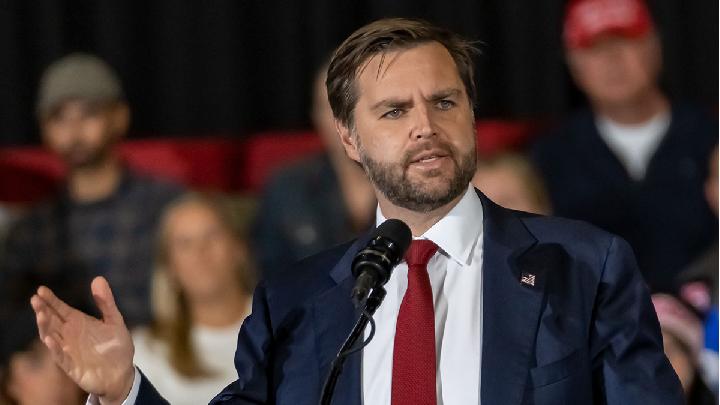
Will the US Pay Iran US 300 – TEMPO.CO, Jakarta – The United States has pledged to provide Iran with access to reconstruction funding equivalent to US$300 billion, approximately Rp5 quadrillion, under the terms of a newly agreed-upon Washington-Tehran peace deal. This commitment, however, is conditional upon Iran fulfilling its obligations outlined in the agreement. The announcement was made by U.S. Vice President JD Vance during an interview with CBS News on June 15, 2026, as reported by the Antara news agency.
“That’s the kind of financial support they could receive, backed by the Gulf Coast Coalition, as long as they uphold their responsibilities,” Vance stated, emphasizing that the funds would be available to Iran if it adheres to the peace deal’s requirements.
Vance also highlighted the U.S. stance on Gulf nations’ potential involvement in Iran’s reconstruction efforts. “We are fully supportive of Gulf countries contributing to Iran’s recovery, but only if Tehran completes its nuclear program commitments,” he added. This remark underscores the strategic alignment between the U.S. and regional allies, who are seen as key stakeholders in the agreement’s implementation.
Iranian Claims and U.S. Denials
Previously, the semi-official Iranian news agency Mehr had cited the peace deal, asserting that the U.S. and its allies were bound to allocate at least US$300 billion toward restoring Iran’s economy. The agreement, according to Mehr, outlines a clear obligation for the U.S. to facilitate economic recovery in the aftermath of the conflict.
However, U.S. President Donald Trump contested this narrative on his Truth Social platform, dismissing it as “Fake News” orchestrated by Democratic supporters. “The story that the U.S. is paying Iran 300 million Dollars is Fake News, put out by the [Democrats]!!!” he wrote, reflecting his skepticism toward the financial commitments promised under the new terms.
Electronic Signing of the Memorandum of Understanding
On Monday, June 15, 2026, the U.S. and Iran took a significant step toward peace by electronically signing a memorandum of understanding (MoU). The document, aimed at resolving the ongoing conflict, was signed remotely by key figures from both sides. According to multiple sources, the signatories included U.S. President Donald Trump, Vice President JD Vance, and Iranian Parliament Speaker Mohammad Bagher Ghalibaf.
The MoU is set to be formally ratified in Switzerland on June 19, with its terms expected to be disclosed within the next 24 to 48 hours by a senior U.S. official. This virtual signing marks a critical phase in the diplomatic process, as it formalizes the framework for economic and security cooperation between the two nations.
Regional Conflict and Its Aftermath
The peace deal comes in the wake of a major military operation launched by the U.S. and Israel on February 28, 2026, which targeted Iran’s leadership. The attack, which killed the nation’s then-Supreme Leader, Ali Khamenei, ignited a regional conflict that reshaped the security dynamics of the Middle East. Since that incident, the war has resulted in thousands of casualties and disrupted global energy markets, creating a pressing need for reconstruction efforts.
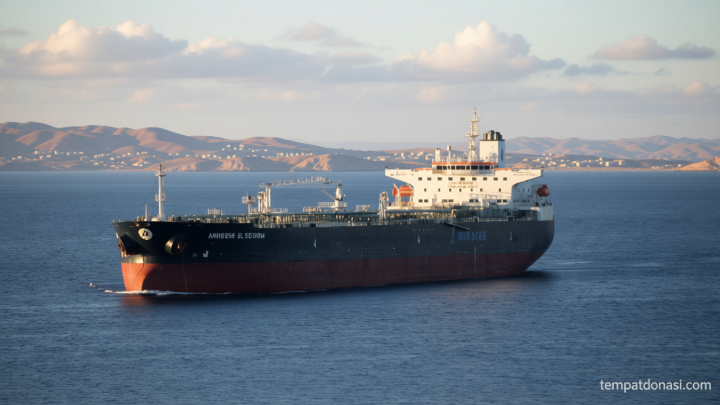
Trump’s recent remarks on the Strait of Hormuz further contextualize the agreement’s significance. On Sunday, he claimed that oil tankers had begun to resume operations through the strait, signaling a potential easing of tensions. This statement was made shortly after Pakistani Prime Minister Shehbaz Sharif shared the news on the X social media platform, indicating a broader regional shift toward stability.
Implications of the Agreement
The $300 billion reconstruction fund represents a substantial investment aimed at revitalizing Iran’s infrastructure and economy. This financial aid would be crucial in addressing the damage inflicted during the conflict, particularly in critical sectors such as energy, transportation, and healthcare. Analysts suggest that such support could also serve as a diplomatic tool to rebuild trust between the U.S. and Iran, fostering long-term cooperation.
Despite the U.S.’s conditional support, the involvement of Gulf countries in the reconstruction process remains a key component of the deal. These nations, which have historically maintained strong ties with Iran, are encouraged to contribute resources and expertise. However, the U.S. has made it clear that Iran’s compliance with nuclear program restrictions is non-negotiable, framing the agreement as a balance between economic aid and strategic security concerns.
Public Reaction and Political Context
The announcement of the MoU and its associated financial commitments has sparked mixed reactions among the public and political figures. While some view the deal as a positive step toward peace, others remain critical, particularly within the U.S. political landscape. Trump’s dismissal of the $300 billion figure as “Fake News” highlights the partisan divide over the agreement’s financial terms.
On the other hand, Iranian officials have expressed optimism about the potential for economic revival. The semi-official Mehr agency emphasized that the peace deal not only addresses immediate reconstruction needs but also sets the stage for broader economic partnerships. This includes a commitment from the U.S. and its allies to ensure Iran’s economic recovery, which could have lasting implications for the region’s trade and investment flows.
As the MoU moves forward, its success will depend on the willingness of both nations to meet their obligations. The formal signing in Switzerland is anticipated to solidify the agreement’s terms and pave the way for its implementation. With the regional conflict having already caused significant disruptions, the reconstruction fund offers a glimmer of hope for restoring Iran’s economic stability and reducing tensions in the Middle East.
Readers interested in staying updated on this developing story can follow Tempo’s coverage on Google News for the latest insights and analysis. The U.S. and Iran’s collaboration, while fraught with challenges, represents a pivotal moment in their complex relationship, with far-reaching consequences for international diplomacy and economic cooperation.