
Amnesty International Indonesia Urges Immediate Military Withdrawal from Jakarta Demonstrations
Amnesty Calls for Military Withdrawal – On Friday, June 12, 2026, Amnesty International Indonesia issued a strong call for the swift removal of military personnel from the scene of student-led protests in Jakarta. The organization expressed concern that the presence of the Indonesian National Armed Forces (TNI) and the National Police (Polri) during the demonstrations could escalate tensions and lead to the use of excessive force against participants.
Concerns Over Military Involvement
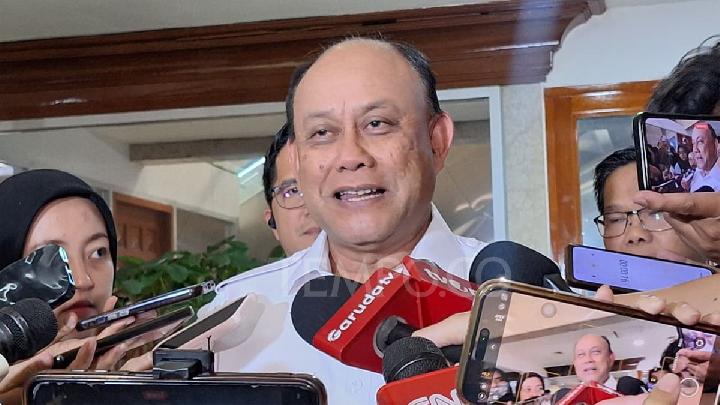
Usman Hamid, the executive director of Amnesty International Indonesia, highlighted the risks of involving the military in crowd control during civilian-led protests. In a written statement, he emphasized that the TNI’s primary responsibility is national defense, not the management of public demonstrations. “The deployment of security forces in large numbers during protests often creates an environment of fear, undermining the constitutional rights of citizens to express themselves freely,” Hamid stated.
“The demonstrators are citizens peacefully exercising their rights, not threats that require a security response,” Hamid added, stressing that the military’s role in such events could be perceived as an overreach.
He also pointed to past incidents, such as the violence that occurred during the August 2025 protests, as evidence of the dangers associated with security forces using force inappropriately. Those protests had resulted in mass arrests, the criminalization of activists, and casualties among demonstrators. Hamid argued that the state has a duty to protect free speech and ensure the safety of those participating in peaceful gatherings.
Students’ Demands and Growing Militarization
Hamid urged authorities to prioritize dialogue and persuasion over repression, especially as student protests have become a focal point for public discontent. The demonstrations in question centered on several key demands, including a review of state budget allocations, reduced prices for essential goods, and the cancellation of initiatives such as the Free Nutritious Meals (MBG) program and the Red and White Village Cooperative. Additionally, protesters called for an end to the increasing militarization of civilian affairs, a trend they believe has undermined democratic processes.
According to Hamid, the current deployment of security forces reflects a broader pattern of using military power to suppress dissent rather than address the underlying issues. “Student demonstrations are not a threat to national security,” he said, “but a legitimate expression of public concern that should be met with open dialogue, not force.”
Policing the Protests
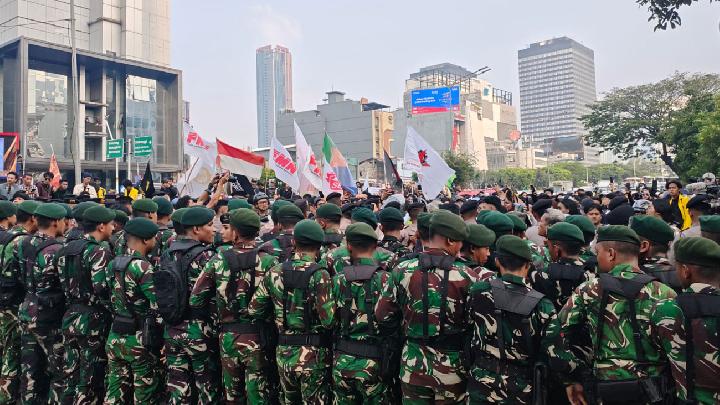
Meanwhile, the Jakarta Metropolitan Police and the TNI defended their security measures, stating that the deployment was necessary to maintain order. A spokesperson for the Jakarta Police, Sr. Comr. Budi Hermanto, announced that 4,151 personnel had been assigned to secure the protests, including 500 soldiers and 3,651 police officers. “Our role is to protect the public and ensure that demonstrations take place safely without disrupting traffic or causing harm,” Hermanto said in a statement released on Thursday.
“We respect the right of citizens to express their views and urge protesters to remain peaceful while respecting the rights of others,” Hermanto added.
The protests, organized around the Hotel Indonesia (HI) Roundabout in Central Jakarta, saw participation from multiple student groups. Among them were the University of Jakarta (UNJ) Against Alliance and the “Indonesia Heading Toward Bankruptcy” movement, which was led by the University of Indonesia Student Executive Board (BEM UI). The UNJ alliance held its demonstration at the university’s Rawamangun campus, while the BEM UI-led coalition originally planned to gather at the HI Roundabout.
However, the police redirected the group to the area in front of the parliamentary complex. BEM UI chair Yatalathof Ma’shum Imawan noted that over 1,000 students joined the protest, departing from the University of Indonesia campus in Depok in buses organized into 16 groups. As of Friday afternoon, organizers reported that many participants remained stranded in the Semanggi and Senayan areas of Central Jakarta, attempting to reach the protest site despite police restrictions.
Amnesty International Indonesia’s concerns align with growing public sentiment about the militarization of protests. Critics argue that the TNI’s involvement in civilian demonstrations, which are typically managed by the police, creates an imbalance in power and increases the likelihood of confrontational tactics. This has sparked debates about the role of the military in domestic affairs and whether their presence is necessary or disproportionate.
Context and Implications
The recent protests come amid heightened political tensions in Jakarta, where students have increasingly used demonstrations as a platform to voice grievances against government policies. The TNI’s participation in these events has been seen by some as a way to project authority, while others view it as an attempt to overshadow the police’s role. This dynamic has raised questions about the effectiveness of security forces in mediating conflicts and the potential for their actions to escalate rather than de-escalate tensions.
Amnesty International Indonesia’s call for military withdrawal is part of a broader effort to ensure that demonstrations remain peaceful and that participants are protected from undue harm. The organization’s stance resonates with activists and civil society groups who have long advocated for a more restrained approach to crowd control. By emphasizing the importance of dialogue, they aim to highlight the need for a balanced response to public dissent.
The issue of militarization in protests is not new, but recent events have brought it to the forefront of public discourse. As the government faces mounting pressure to address economic concerns and political grievances, the way it handles demonstrations will be closely watched. Usman Hamid’s comments underscore the belief that security forces should act as guardians of rights, not enforcers of control.
Read: UI Students Skip DPR Protest Over Loss of Trust in Parliament
Stay informed with the latest updates from Tempo on Google News.