
UI Students Move Protest to HI Roundabout Amid Frustration with Parliamentary Institutions
UI Students Skip DPR Protest Over – On Friday, June 12, 2026, a group of students from the University of Indonesia (UI) and other universities opted to hold their protest at Jakarta’s Hotel Indonesia (HI) Roundabout rather than the traditional venues of the House of Representatives (DPR) or the Presidential Palace. This decision, according to Yatalathof Ma’shum Imawan, the chair of the UI Student Executive Board (BEM UI), reflects a deepening distrust in the political institutions that have failed to address public grievances effectively.
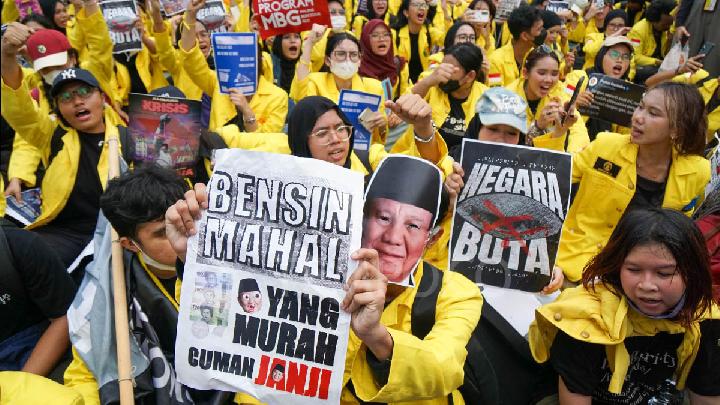
The protest, titled #IndonesiaMenujuBangkrut (“Indonesia Heading Toward Bankruptcy”), was organized by a coalition of student bodies from the University of Indonesia, IPB University, Jakarta State Polytechnic, Pancasila University, and Gunadarma University. It also involved prominent student organizations such as the National Student Front and the Progressive Student Union (Semar UI). The movement aims to highlight growing concerns over the country’s economic instability and democratic backsliding, which students claim are being ignored by policymakers.
Athof, commonly known as Yatalathof, emphasized that the choice of HI Roundabout was intentional. “The government and DPR have become so aligned in their messaging that they no longer represent distinct voices,” he said. “Their cooperation on policies that worsen people’s lives shows a lack of accountability, which makes us question the value of protesting at their doorstep.” This sentiment underscores a broader shift in student activism, where traditional protest sites are no longer seen as symbolic of effective governance.
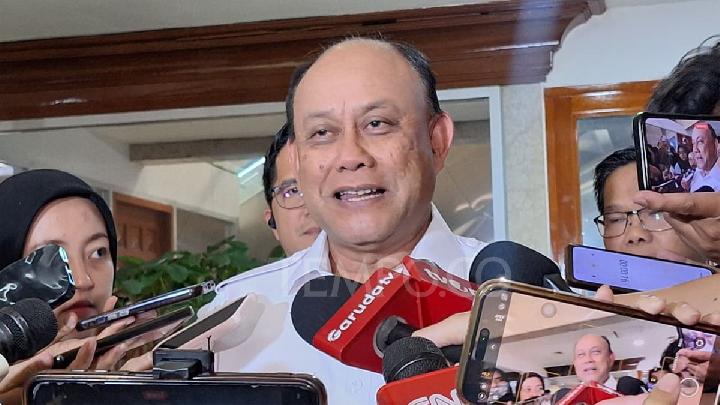
“The DPR and the government now tend to speak with one voice on every policy, even policies that are making people’s lives more difficult,” Athof told reporters in Jakarta on Friday. “That’s why we no longer believe in demonstrating there.”
Despite this strategic shift, the protest faced immediate challenges. As student demonstrators approached HI Roundabout in Central Jakarta, they were intercepted by Jakarta police in the Semanggi area. Officers directed them to relocate the rally to the front of the DPR building, citing the need to manage traffic and public safety. Athof criticized the move as an overreach, arguing that the police should have been informed of the protest’s location in advance.
“We had already prepared everything and submitted notification to the police stating that the rally would be held at the HI Roundabout,” he said. “It was a planned route, and the authorities should have accommodated it.” The decision to block the original path affected approximately 1,000 participants, leaving organizers scrambling to adjust the event’s logistics. By Friday afternoon, the group had yet to reach the HI Roundabout, with some demonstrators walking through the streets of Jakarta to join the gathering.
Policing the Protests: A Point of Contention
Jakarta Metropolitan Police spokesperson Sr. Comr. Budi Hermanto defended the restrictions, stating that HI Roundabout is a hub for commercial activity and public transportation. “The area around the HI Roundabout is not designated as a location for public demonstrations,” he said in a written statement. “We advised protesters to choose alternative sites that would minimize disruption.”
“The HI Roundabout serves as a major center of public activity and business operations in the capital,” Budi added. “Protesters need to consider the impact of their actions on daily life.”
However, Athof and his team viewed the relocation as a repressive tactic, particularly since the original plan was approved and communicated to the police. The conflict highlights tensions between student activists and law enforcement, with the latter prioritizing infrastructure and traffic flow over the symbolic value of protest locations. The police’s argument that HI Roundabout is not an official protest site contrasts with the students’ belief that its prominence makes it an ideal place to draw national attention.
The Demands: A Call for Accountability and Reform
The coalition’s protest centered on five core demands, each reflecting the students’ dissatisfaction with current governance. These include an end to what they call wasteful state spending, lower prices for essential goods and fuel, the suspension of the Free Nutritious Meals (MBG) program and the Red and White Village Cooperative initiative, the removal of militarization from civilian affairs, and a demand for President Prabowo Subianto to take responsibility for policy failures.
According to Athof, these issues have been exacerbated by a lack of transparency and responsiveness from the DPR and government. “The MBG program, for example, has become a symbol of inefficiency, with funds mismanaged and benefits reaching only a fraction of the intended population,” he explained. “Similarly, the military’s involvement in domestic policies has stifled civil discourse, creating a perception of authoritarian control.”
The protest also drew support from non-student groups, including labor unions and women’s community organizations. These participants gathered near HI Roundabout by Friday afternoon, waiting for the student demonstrators to arrive. Some had been present since the early morning, expressing solidarity with the cause. “The economic struggles we face are not just a student issue—they’re a national crisis,” said one labor activist. “We’re here to show that people across sectors are united in demanding change.”
HI Roundabout: A Symbolic Choice for Public Attention
HI Roundabout’s selection as a protest site was not arbitrary. The location, a well-known landmark in Jakarta, has historically been used for major political gatherings, making it a powerful choice for visibility. Athof argued that the decision to hold the rally there was meant to amplify the message to a wider audience, bypassing the bureaucratic inertia of traditional protest areas.
“By choosing HI Roundabout, we hoped to reach the public in a space they recognize as central to daily life,” he said. “If we protest in front of the DPR, it’s easy for people to dismiss it as a partisan event. But here, the message is clear: this is about the entire nation.”
Despite the police’s intervention, the protest managed to attract a diverse group of participants. The coalition’s efforts to rally support reflect a growing frustration with the current political landscape, where student voices are often drowned out by institutional complacency. As the demonstrators gathered, the tension between the protest and the authorities remained palpable, with students vowing to continue their campaign until their demands are met.
The protest serves as a microcosm of broader challenges facing Indonesian democracy. With public trust in institutions at an all-time low, student movements are increasingly turning to unconventional spaces to challenge the status quo. This strategy, while effective in drawing attention, also underscores the difficulty of navigating political dissent in a context where traditional avenues for expression are seen as unreliable.
As the event unfolded, the coalition remained determined to highlight the nation’s economic and democratic crisis. Whether the HI Roundabout protest will succeed in reshaping public discourse remains to be seen, but its symbolic significance cannot be overlooked. For students and activists alike, the location represents a bold statement against the current administration’s perceived lack of accountability.
The ongoing demonstrations highlight the role of youth in driving political change, even in the face of logistical and institutional obstacles. As the protest continues, it is likely to become a focal point for discussions about the future of Indonesian democracy and the responsibilities of those in power. With demands spanning economic policy and military influence, the movement’s impact could extend beyond the immediate protest, influencing public opinion and policy debates nationwide.