
BMKG Weather Alert: Rainfall and Storms Forecast for Key Indonesian Cities
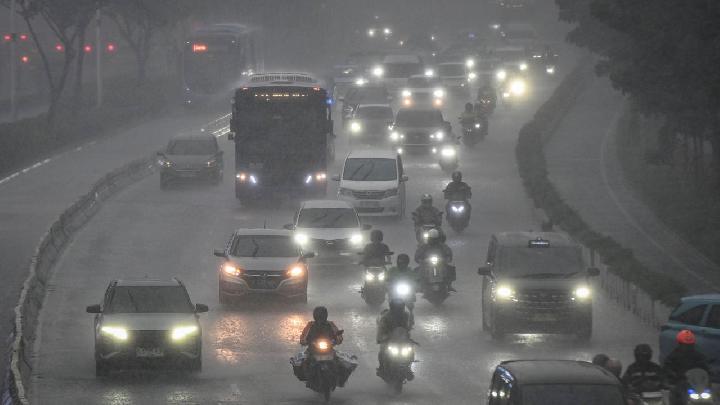
BMKG – As reported by Tempo.CO, Jakarta, the Meteorology, Climatology, and Geophysics Agency (BMKG) has issued a weather alert predicting light, moderate, and heavy rainfall, possibly accompanied by lightning and strong winds, in several major Indonesian urban centers on Saturday. The warning highlights the varying intensity of precipitation across the nation, with some regions bracing for more severe conditions. According to the official BMKG website, as cited by ANTARA, forecaster Nazmi Nariyah provided insights into the atmospheric dynamics driving these weather patterns.
Atmospheric Convergence Zones and Rainfall Patterns
Nazmi Nariyah explained that the convergence zone—a region where air masses meet—extends from the Pacific Ocean to the east of the Philippines and the Indian Ocean to the west of Sumatra. This convergence contributes to the formation of rain clouds, which are expected to develop in areas under its influence. The forecaster emphasized that these conditions could lead to increased rainfall activity, with the potential for thunderstorms and gusty winds in specific locations.
Regions in Risk for Moderate to Heavy Rainfall
The BMKG forecast indicates that cities such as Tanjung Pinang, Padang, and Tanjung Selor may face moderate to very heavy rainfall. These areas are likely to experience strong downpours, which could disrupt daily routines and affect transportation. The weather agency also warned that lightning and high winds might accompany the rain, increasing the risk of flash floods or landslides in vulnerable regions. This pattern contrasts with other cities, where the weather is expected to remain milder.
Light to Moderate Rainfall in Other Cities
Meanwhile, a different set of urban centers will see light to moderate rain. These include Banda Aceh, Medan, Pekanbaru, Jambi, Bengkulu, Palembang, Bandar Lampung, Serang, Bandung, Semarang, Pontianak, Palangkaraya, Samarinda, Denpasar, Kupang, Sorong, Nabire, and Jayapura. The rainfall in these areas is anticipated to be less intense, though it could still impact outdoor activities and travel plans. The weather conditions are likely to be manageable, with minimal disruption compared to the more severe forecasts elsewhere.
Cloudy Skies in Major Cities
Some major Indonesian cities will remain under cloudy conditions throughout the day. Jakarta, Banjarmasin, Mataram, Makassar, Kendari, Gorontalo, Manado, Ternate, Ambon, Manokwari, Jayawijaya, and Merauke are predicted to see minimal precipitation, with the primary weather feature being overcast skies. This forecast provides relief to residents in these areas, who may avoid the more intense rain events affecting other parts of the country.
Forestry Minister’s Insights on Fire Season Trends
Turning to environmental concerns, the Forestry Minister, Raja Juli Antoni, shared updates on the country’s progress in managing forest and land fires during the El Nino phenomenon. He noted that Indonesia’s capacity to mitigate these fires has improved significantly over recent El Nino cycles. Specifically, the number of affected areas has decreased, reflecting better preparedness and response strategies.
“In the last two El Nino cycles, the area impacted by forest and land fires has been reduced by 55.6 percent compared to 2015,” Antoni stated. He further highlighted that the 2015 El Nino event caused approximately 2.61 million hectares of land to be affected, a figure that dropped to 1.64 million hectares in 2019 and then to around 1.16 million hectares in 2023. This decline suggests a more effective approach to preventing and controlling fires.
Antoni also mentioned that the BMKG predicts this year’s dry season will arrive earlier than usual, last longer, and be more intense. The peak of the dry season is expected to occur between July and September, which could have implications for fire risk management. This forecast aligns with the agency’s broader analysis of climate patterns, emphasizing the need for proactive measures to safeguard ecosystems and communities.
Seasonal Impacts and Future Outlook
The convergence of weather and climate factors underscores the importance of monitoring seasonal changes. While the current rainfall patterns are a temporary relief for some regions, the prolonged dry season may bring challenges. BMKG’s predictions highlight the shift in climatic norms, which could influence agricultural planning, water resource management, and fire prevention efforts. The agency’s data, combined with the Forestry Minister’s insights, paints a picture of a country adapting to evolving environmental conditions.
For residents in cities facing potential heavy rainfall, the weather advisory serves as a reminder to prepare for possible disruptions. Meanwhile, those in areas with cloudy skies can expect a more stable weather environment, though the dry season’s arrival may soon alter that. The overall forecast reflects a dynamic interplay between meteorological conditions and long-term climate trends, providing a foundation for informed decision-making.
As the dry season approaches, stakeholders across sectors will need to adjust their strategies. The reduction in forest fire incidents over recent years demonstrates progress, but the extended dry period could test these efforts. BMKG’s weather forecasts and the Forestry Minister’s remarks collectively indicate a nation striving to balance environmental challenges with adaptive solutions. This balance is crucial for mitigating the impacts of extreme weather events and ensuring sustainable resource management.
Tempo.CO also highlighted the possibility of an earlier-than-usual dry season, which may reduce the likelihood of heavy rain in June. This development could have far-reaching effects, influencing everything from crop cycles to urban planning. The integration of weather forecasts with environmental policies highlights the interconnectedness of natural systems and human activities, reinforcing the need for continuous monitoring and strategic interventions.
Conclusion and Regional Preparedness
With the convergence zones and seasonal climate shifts shaping the weather, regional preparedness is essential. Cities experiencing heavy rainfall should prioritize infrastructure reinforcement, while those in the dry season must focus on fire prevention and water conservation. The BMKG’s forecasts and the Forestry Minister’s observations together illustrate a proactive approach to climate challenges, offering hope for a more resilient future.
Read more about Indonesia’s expanding dry season and its implications for the environment in the Tempo.CO article. Stay updated with the latest news on Tempo.CO via Google News for real-time insights into weather and climate developments across the region.